
News ·
Launch of vibration-based condition monitoring and anomaly detection for the pumps at the CHEMPARK Krefeld-Uerdingen river water treatment plant
The use of Industrial IoT (IIoT) and vibration-based sensor technology is opening up new possibilities in predictive maintenance. At the CHEMPARK site in Krefeld-Uerdingen, this technology is being used at the river water treatment plant.
The river water treatment plant ensures the supply of process water to the production facilities and is therefore essential for maintaining stable processes at CHEMPARK. Unplanned shutdowns can have serious consequences here—ranging from production losses to regulatory risks.
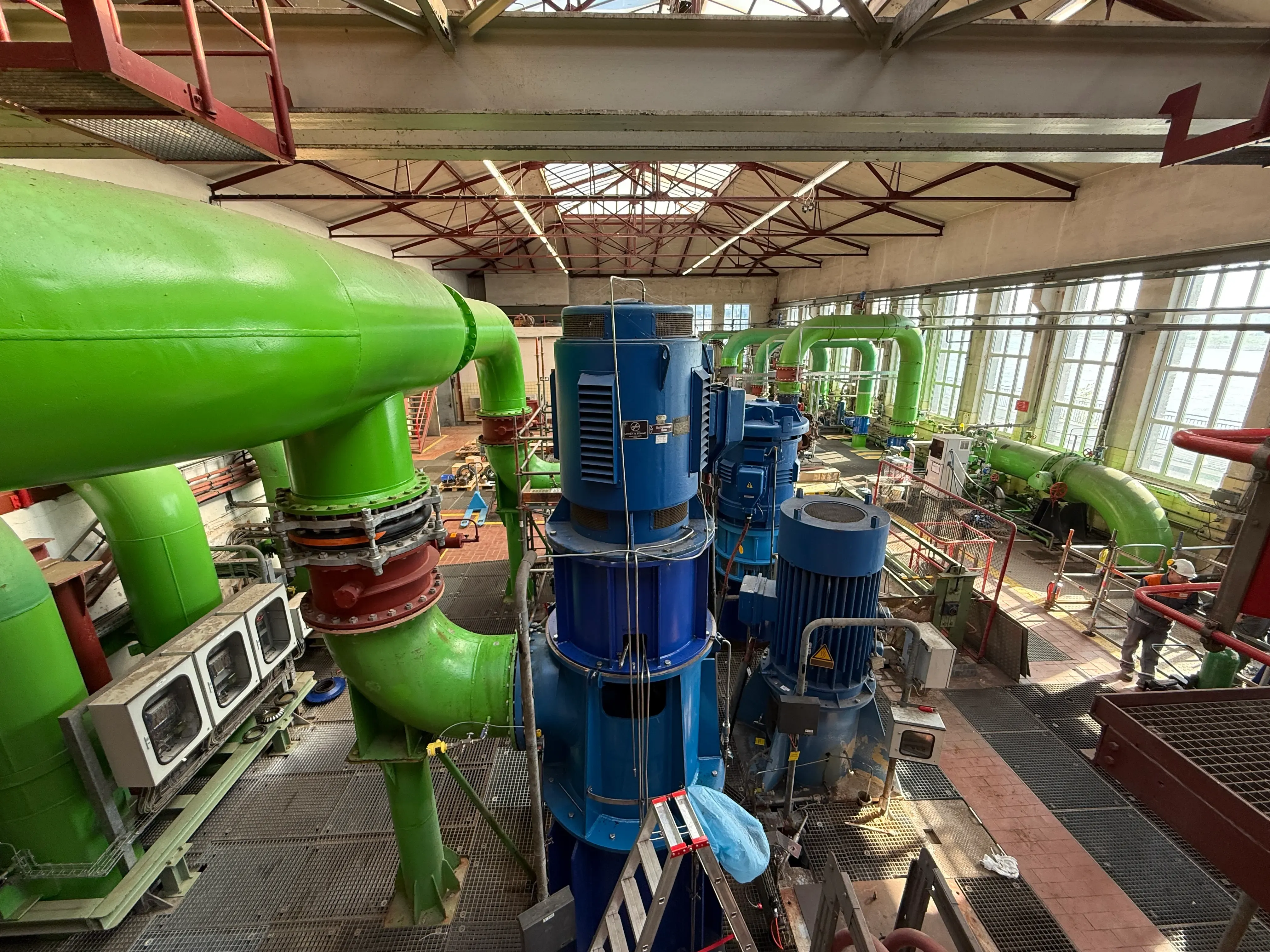
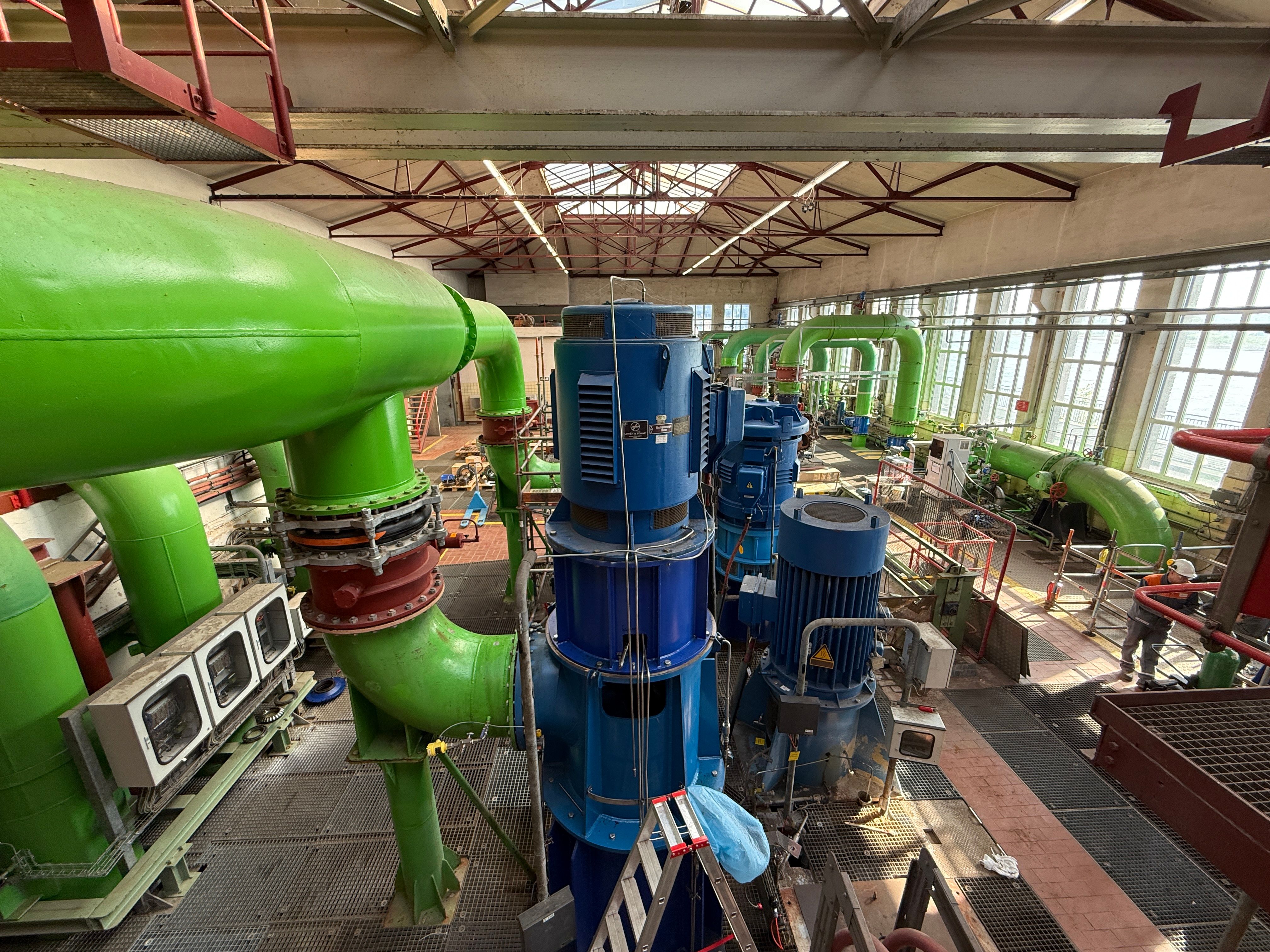
A look inside the river water treatment plant at the CHEMPARK site in Krefeld-Uerdingen
By connecting the sensors via LoRaWAN, vibration data can be efficiently collected, transmitted, and analyzed on an event- or interval-based basis as part of a retrofit. This allows anomalies to be detected and maintenance measures to be planned in advance.
Together with CURRENTA operations engineer Marcel Burtscheidt and IT portfolio and infrastructure manager Murat Mutlu, we explore how predictive maintenance scenarios at CHEMPARK help reduce risks, avoid costs, and future-proof maintenance strategies.
Murat Mutlu and Marcel Burscheidt share their real-world experiences

Murat Mutlu is an IT Portfolio Manager at Conneqtive and oversees the LoRaWAN and private 5G portfolio at CHEMPARK.
As a plant technician at the river water treatment plant in Krefeld-Uerdingen, Marcel Burscheidt is responsible, among other things, for ensuring the availability of the pumps.
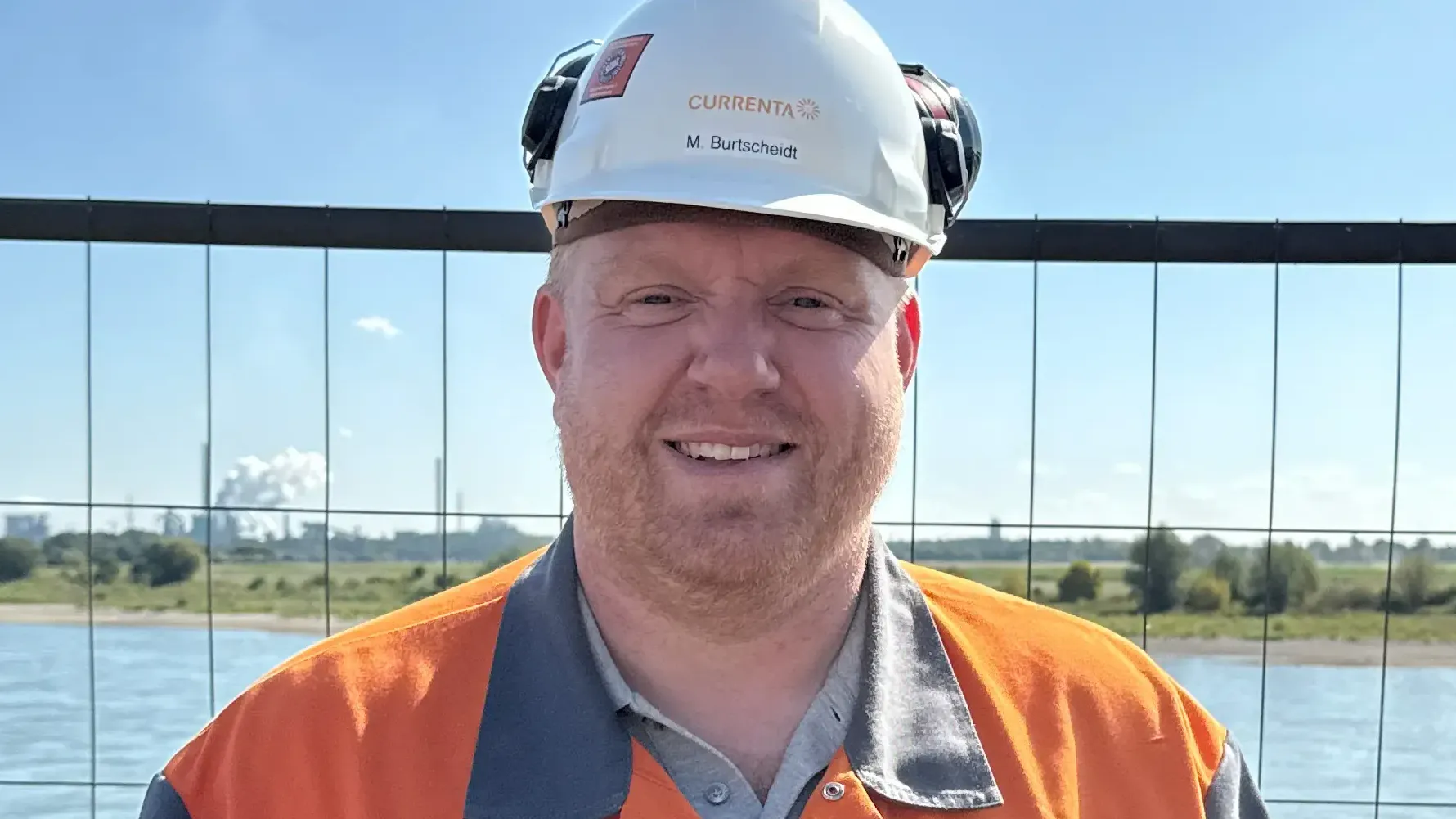
Why is the pumping system at the river water treatment plant suitable for a pilot project involving predictive maintenance?
Murat Mutlu: Pumps are the heart of many production facilities. They typically run continuously and are subjected to high mechanical stresses. Failures are particularly critical because they directly affect the cooling circuits at CHEMPARK. Due to their central role, clearly measurable operating parameters, and high downtime costs, pumps offer ideal conditions for the use of sensor technology and vibration-based analysis. This allows anomalies to be detected early and downtime to be prevented. Perfect for a pilot project in the field of predictive maintenance.
How does the technology work—and how complex and expensive is the installation?
Murat Mutlu: We provide the sensor technology, LoRaWAN connectivity, and the complete data backend—including visualization and an analytics dashboard. Certified vibration experts from CURRENTA can assist in remotely categorizing faults. The facility receives regular reports or is immediately notified via alerts in the event of deviations.
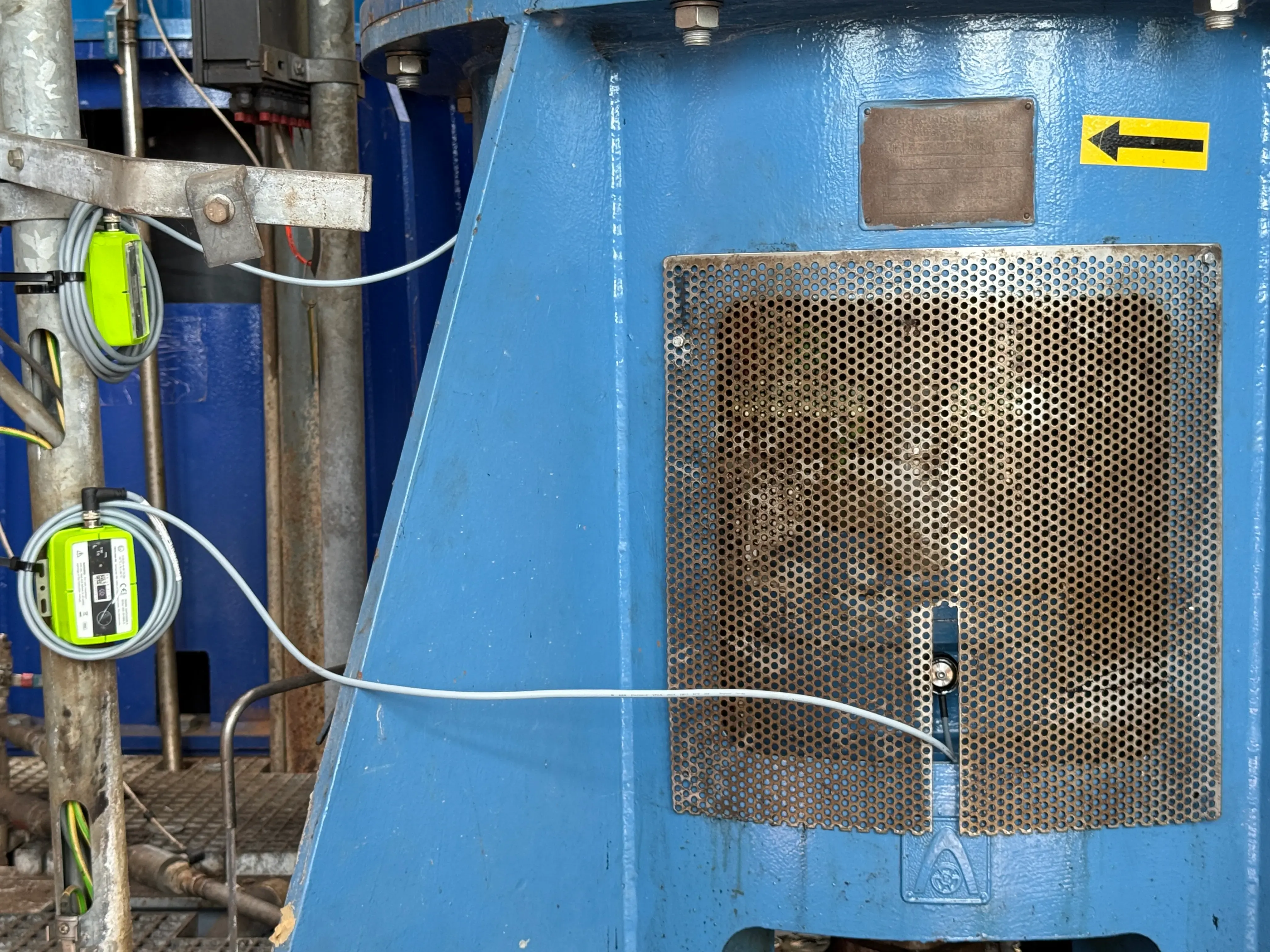
Sensors transmit vibration data via LoRaWAN
Regarding costs: Our model is based on an “as-a-service” approach. This means no upfront investment costs and no need for your own infrastructure. You simply pay a monthly service fee for each sensor installed—which covers hardware, maintenance, and data analysis.
What challenges are involved in operating the river water treatment plant?
Marcel Burtscheidt: One of our biggest challenges is the long lead times for repairs or replacement parts. Take, for example, the impeller in our raw water pumps: It’s located at the bottom of the Rhine, generating the necessary power and ensuring that water can be drawn in through the pipes. It is a massive cast component that is difficult and time-consuming to repair if it is damaged. Replacement parts are not available on short notice.
In addition, the volume of process water consumed at CHEMPARK fluctuates. Although we receive information—for example, about planned plant shutdowns—actual water consumption depends on many other factors. This makes it difficult to plan service and maintenance visits.
Predictive maintenance measures help us anticipate critical situations and thus drastically reduce the risk of breakdowns.
What information is helpful for better planning of maintenance and spare parts procurement?
Marcel Burtscheidt: Vibration trends are particularly useful. They provide us with early indications of wear on impellers or bearings. Combined with temperature and current data from the control system, this provides a more comprehensive picture of the pump’s condition. This allows us to prevent major damage and plan for replacement parts more effectively.
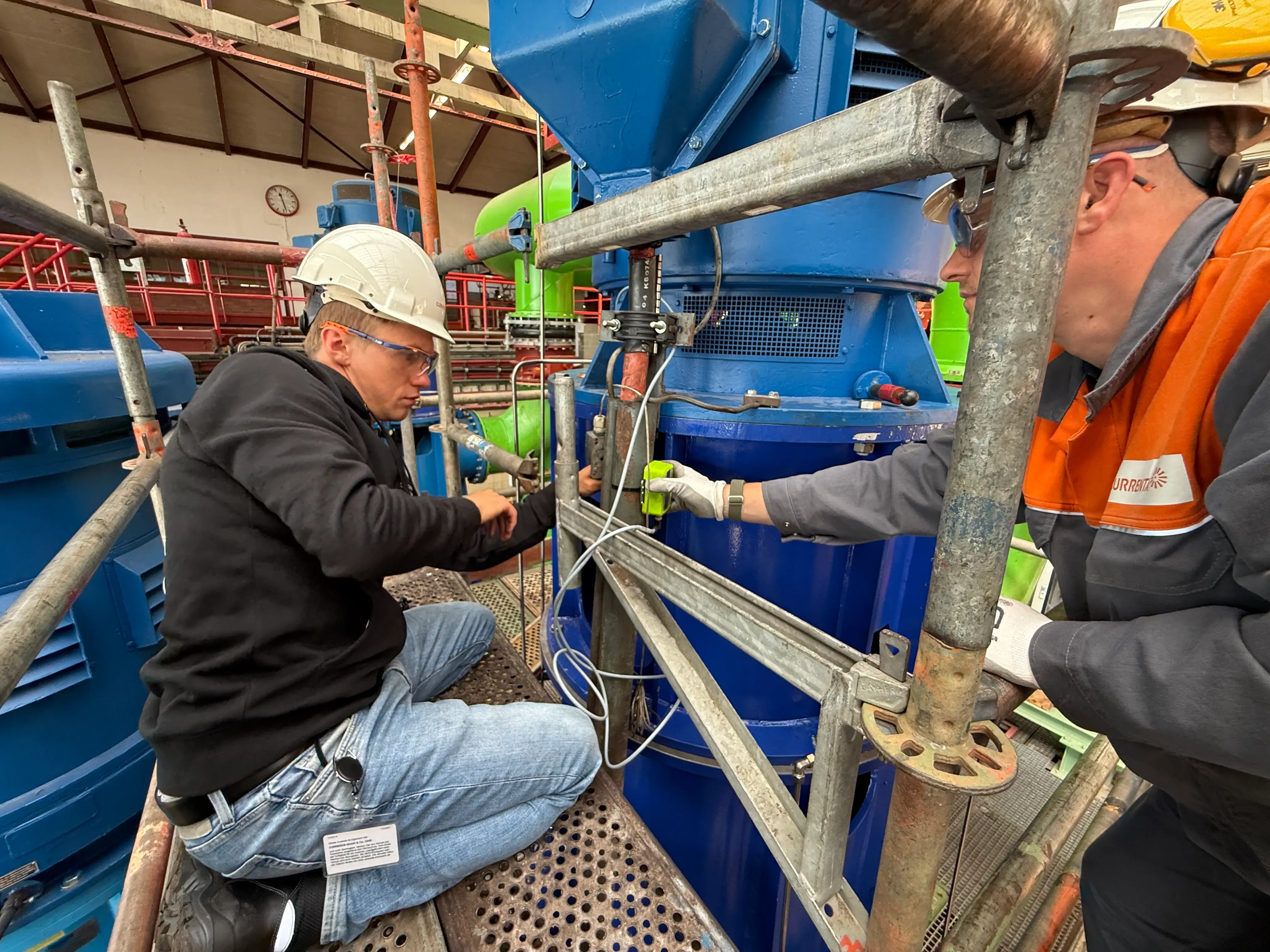
Conneqtive employee Anton Welker attaches the sensor to the pump
What are your requirements regarding the installation and IT security of such a solution?
Marcel Burtscheidt: The retrofit approach was ideal because it allowed us to upgrade the existing system without disrupting ongoing operations. What’s important to us is a solution that requires as little maintenance as possible, provides stable data, and offers high measurement accuracy. We want to be able to view the results in a digital dashboard.
Murat Mutlu: We rely on secure, encrypted LoRaWAN communication that is strictly separated from the production network. In addition, we provide support during the integration process—including approvals from internal IT/OT teams.
What results can you expect from a pilot project?
Marcel Burscheidt: During the pilot, we collect data over several weeks. During this time, we establish a baseline for future trends, such as increasing imbalances or bearing seizure. Deviations from the baseline then provide us with maintenance recommendations and opportunities for cost savings.
What evaluation criteria are appropriate for demonstrating the success of a pilot project?
Murat Mutlu: There will never be 100% safety—material defects or unforeseeable events will always pose residual risks. What matters is how much we can reduce the likelihood of serious damage and unplanned outages. A pilot project is successful if it creates transparency, optimizes maintenance, and significantly reduces residual risk.
What additional benefits do you expect to gain from data-driven monitoring?
Marcel Burscheidt: In addition to improved availability and predictability, there are other benefits: We can order necessary replacement parts in advance, identify opportunities for energy efficiency, and extend the service life of the systems. In addition, by conserving resources, we are contributing to sustainability. These aspects make our pilot program not only economically but also strategically compelling.
Conclusion
The example of the pumps at the river water treatment plant clearly illustrates the potential that reliable sensor technology and data analysis hold for the process industry. While operations benefit primarily from lower repair costs, predictable spare parts procurement, and greater supply reliability, we see the implementation of the pilot project above all as an opportunity to gain valuable experience and unlock further operational and strategic advantages. One thing is clear: Predictive maintenance cannot completely eliminate residual risks—but it creates transparency, reduces unpredictability, and increases the resilience of critical infrastructure. At the same time, it contributes to cost savings and significantly reduces the likelihood of unplanned outages through early intervention.
Contact us now
and learn more about our Best Case solution, including the live dashboard
Contact us hereIn a nutshell: What Conneqtive offers
- Early warning system for bearing damage, imbalance, and resonance effects
- Quick integration—ready to use right away with no long lead time
- Secure data transmission via LoRaWAN with encrypted separation
- Transparent KPI reports on ROI, failure reduction, and service life extension
- Flexible "as-a-service" model, including a proof of concept—with no capital expenditures


Case Study
Predictive Maintenance
Less downtime, longer operating times – how predictive maintenance increases the uptime and service life of CURRENTA river water pumps.


IoT Knowledge
Predictive maintenance
Continuous data acquisition and intelligent analyses with IIoT enable you to recognize the maintenance requirements of systems at an early stage and avoid unplanned downtimes.