
Blog Post ·
Steam traps and condensate drains are among the unassuming yet critical components of industrial steam systems. Their function is to reliably discharge condensate while keeping steam within the system. If this function is compromised, it often leads to high energy losses that go unnoticed, process problems, and—in the worst-case scenario—safety-related malfunctions.
Why Malfunctions Often Go Unnoticed
Precisely because these components are located in exposed areas and are installed in large numbers, malfunctions often go undetected for a long time in everyday use. In many systems, they are inspected only at longer intervals. In practice, this is often not enough to detect creeping problems in time.
The Role of Steam Traps and Condensate Drains
Steam traps and condensate drains perform a clear separation function in the steam network. They are designed to discharge condensate, air, and non-condensable gases, while retaining the valuable steam within the system. In this way, they ensure efficient heat transfer and contribute to operational stability.
As soon as this function is no longer performed properly, the system loses its balance. Steam can then escape uncontrollably, or condensate can remain in the line. Both scenarios are problematic from the perspective of efficiency and operational safety.
The Most Common Failure Patterns
A typical failure pattern is “blow-through.” In this case, the steam trap opens too far—either constantly or partially—resulting in a constant loss of steam. This causes direct energy losses and can become costly during operation.
Equally relevant is “blockage.” In this case, condensate is no longer discharged and accumulates in the system. This can lead to backflow, reduced heat transfer, and, in extreme cases, water hammer.
Another issue is incorrect sizing. If a steam trap is not suited to the actual load, pressure, or installation conditions, it will not operate optimally even when new. Added to this are wear, contamination, and mechanical aging, which further impair its functionality.
The Consequences of Errors
The immediate consequence of faulty steam traps is usually higher energy consumption. When steam escapes unused or condensate is not properly drained, the system must expend more energy to maintain the desired operating conditions. This has a direct impact on operating costs.
Furthermore, process stability suffers. Condensate buildup can impair heat transfer, cause temperature fluctuations, and make production processes less stable. In sensitive processes, this can affect product quality.
Safety-related effects are particularly critical. If condensate remains in the system uncontrolled, the risk of water hammer and mechanical stress increases. Then it is no longer just a matter of costs, but also of plant integrity and occupational safety.&
Why Manual Inspections Are Often Insufficient
Many companies still inspect steam traps as part of periodic rounds. This makes sense, but it’s often too cursory to reliably detect malfunctions during ongoing operations. Significant problems can develop between two inspections without becoming apparent.
Added to this is the sheer number of components in larger plants. Anyone operating hundreds or thousands of steam traps cannot manually monitor each one at short intervals. This creates a gap between technical requirements and operational reality.
This is precisely where monitoring becomes essential. Not every component needs to be monitored with the same intensity at all times, but critical areas require transparency. Prioritization based on importance and risk is the key.
How Monitoring Makes a Difference
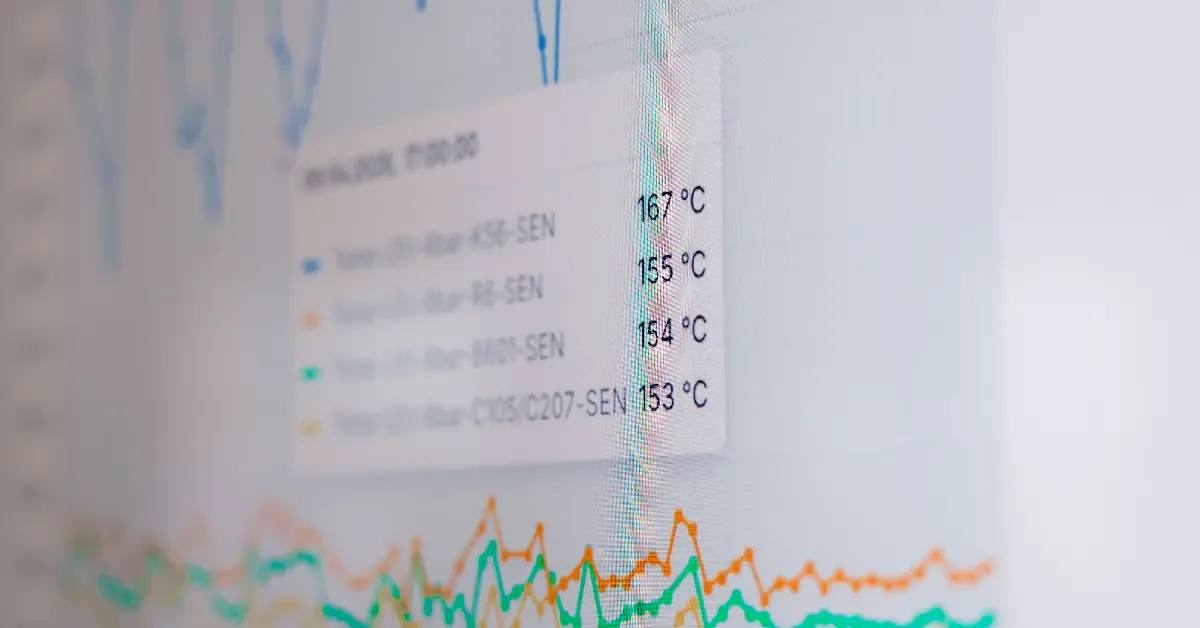
Monitoring steam traps and condensate drains provides a different perspective on the system. Instead of just performing spot checks, it provides condition data throughout ongoing operation. This makes deviations immediately visible.
This is particularly valuable for maintenance. When fault patterns can be detected early, maintenance tasks can be planned more effectively, and unnecessary routine work can be avoided. This improves the team’s efficiency and reduces the risk of downtime.
This is also relevant from an energy perspective. Malfunctions are not only detected after they have already caused significant costs. They can be identified, assessed, and prioritized earlier.
Three Steps Companies Should Take Based on This
1. Systematically Identify Critical Steam Traps
The first step is to systematically identify the relevant steam traps and condensate drains. Not every drain is equally critical, so plant sections should be evaluated based on process relevance and risk. On this basis, it is possible to determine which points should be monitored particularly closely.
2. Define a measurement strategy
The second step is to establish a clear measurement and escalation strategy. It should be defined which deviations trigger which responses and who is responsible for them. Without such rules, even good data often has no operational impact.
3. Integrate monitoring into maintenance and energy management
In the long term, monitoring should be viewed not as a standalone project but as part of the maintenance and energy management framework. This transforms reactive fault handling into a controllable process with clear prioritization.&
Conclusion: Small Components Have a Big Impact
Steam traps and condensate drains may seem small, but they have a major impact on efficiency, safety, and availability. Common issues such as blow-through, blockages, or incorrect sizing cause energy losses and operational risks that are easily underestimated in day-to-day operations.
From Reaction to Monitoring
Those who systematically monitor these components detect problems earlier and can manage maintenance more effectively. This transforms a traditional inspection task into a measurable lever for smart steam and industrial energy efficiency.
Back to the Table of Contents.
Further information on this topic:
Put an end to invisible energy losses and undetected risks in your steam network
Let's pinpoint exactly where your plant is losing money and how you can immediately improve process stability.