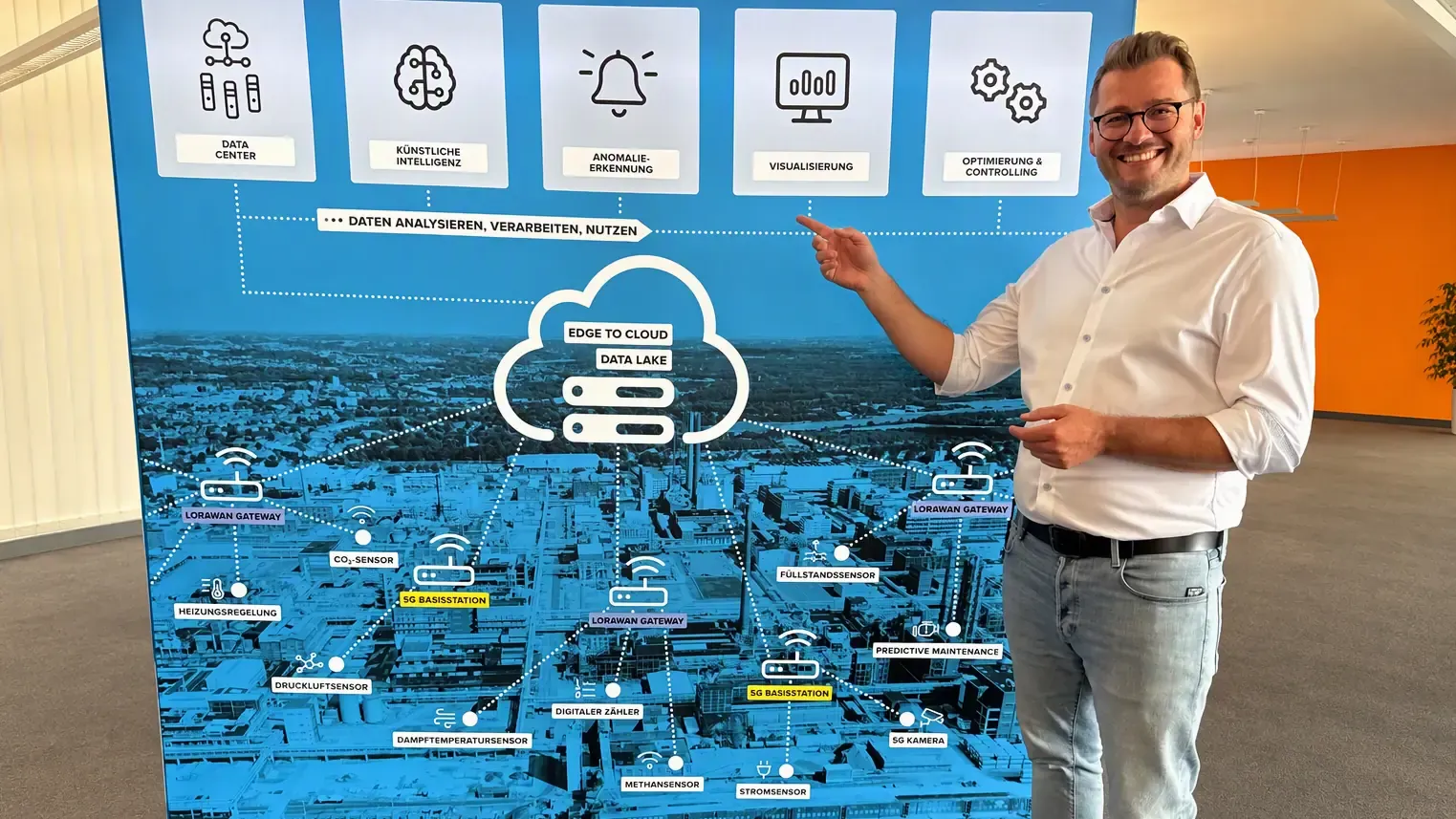
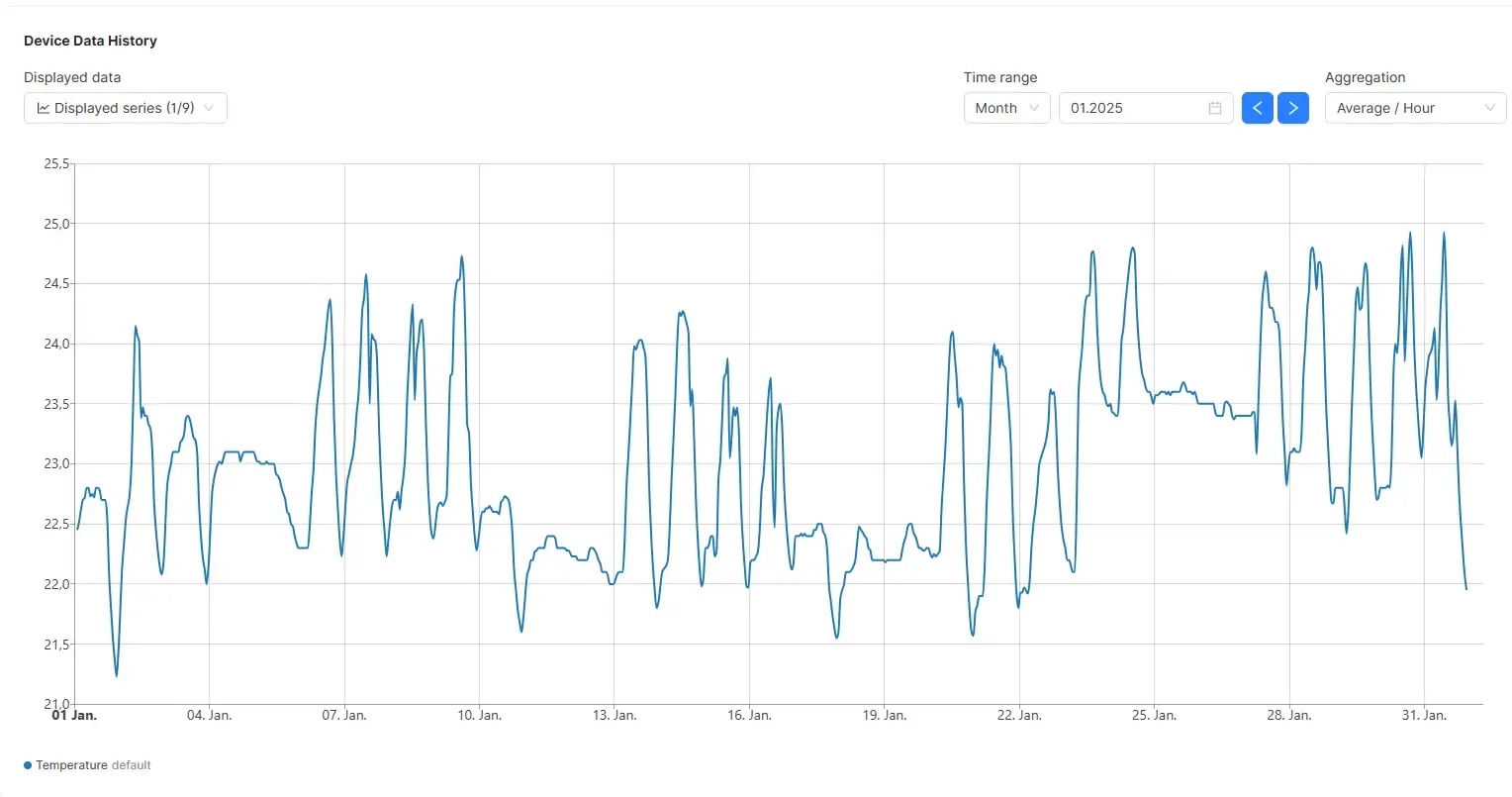
IoT makes environmental and ambient data continuously and automatically visible for the first time. Instead of recording individual measurements manually, companies can monitor temperature, humidity, air quality, or other relevant values continuously and respond to deviations immediately. That is precisely the major advantage of environmental monitoring with IoT: it creates transparency where irregularities are often noticed only late.
This transparency delivers real added value especially in industry, logistics, warehousing, building operations, and sensitive production environments. Environmental values affect not only processes, but often also quality, safety, energy consumption, and compliance.
What environmental monitoring with IoT means
Environmental monitoring with IoT describes the digital capture, transmission, and analysis of environmental and ambient values. Sensors, communication paths, and analytics systems come together to make relevant data continuously available.
Data instead of individual measurements
Instead of occasional manual measurements, values are captured automatically. This creates a more complete picture of the situation on site.
Continuous visibility
IoT enables ongoing monitoring of relevant environmental conditions. This is particularly important when fluctuations or limit violations need to be detected early.
Action instead of documentation alone
The data serves not only as evidence, but also as a basis for action. In the event of deviations, alarms, notifications, or measures can be triggered.
Which values can be monitored
Depending on the use case, many different environmental and ambient values can be captured via IoT.
Temperature
Temperature is one of the most classic and important measured values. It plays a major role in production, storage, technical rooms, and sensitive areas.
Humidity
Humidity values are relevant for material protection, storage, quality, and building operations. Fluctuations can have a direct impact on processes.
Air quality
Monitoring air quality is especially important in sensitive production, work, or storage environments. It can provide indications of contamination or malfunctions.
Emissions and environmental parameters
Depending on the industry, emissions or other environmental parameters may also be relevant. This extends the scope of application toward compliance and sustainability.
Why this topic is so relevant for industry
Environmental monitoring is not an isolated sustainability topic, but often a core operational building block.
Safeguarding quality
Many products and processes are sensitive to temperature, humidity, or air conditions. Monitoring these values makes it possible to identify quality risks early.
Keeping operations stable
Ambient conditions affect machines, warehouses, technical equipment, and processes. IoT creates a better basis for stable operating conditions here.
Making responsibilities visible
When environmental values are documented on an ongoing basis, conditions, deviations, and measures become easier to trace. This helps both operationally and organizationally.
What benefits IoT-based environmental monitoring offers
Digital monitoring of environmental values brings several concrete benefits.
Early warning of deviations
Deviations are detected faster than with manual checks. This improves responsiveness and reduces risks.
Less inspection effort
Many checks no longer have to be carried out manually. This saves time and increases data quality.
Better traceability
Measured values can be analyzed historically, documented, and compared. This is valuable for quality, ESG, and internal reporting.
Site comparison and benchmarking
Especially across multiple sites, differences in environmental conditions become visible. This can reveal optimization potential.
Where environmental monitoring is particularly useful
// The use case is strong across industries, but particularly relevant in certain areas. //
Production
In manufacturing environments, temperature and air conditions can have a direct impact on process stability and product quality.
Warehousing and logistics
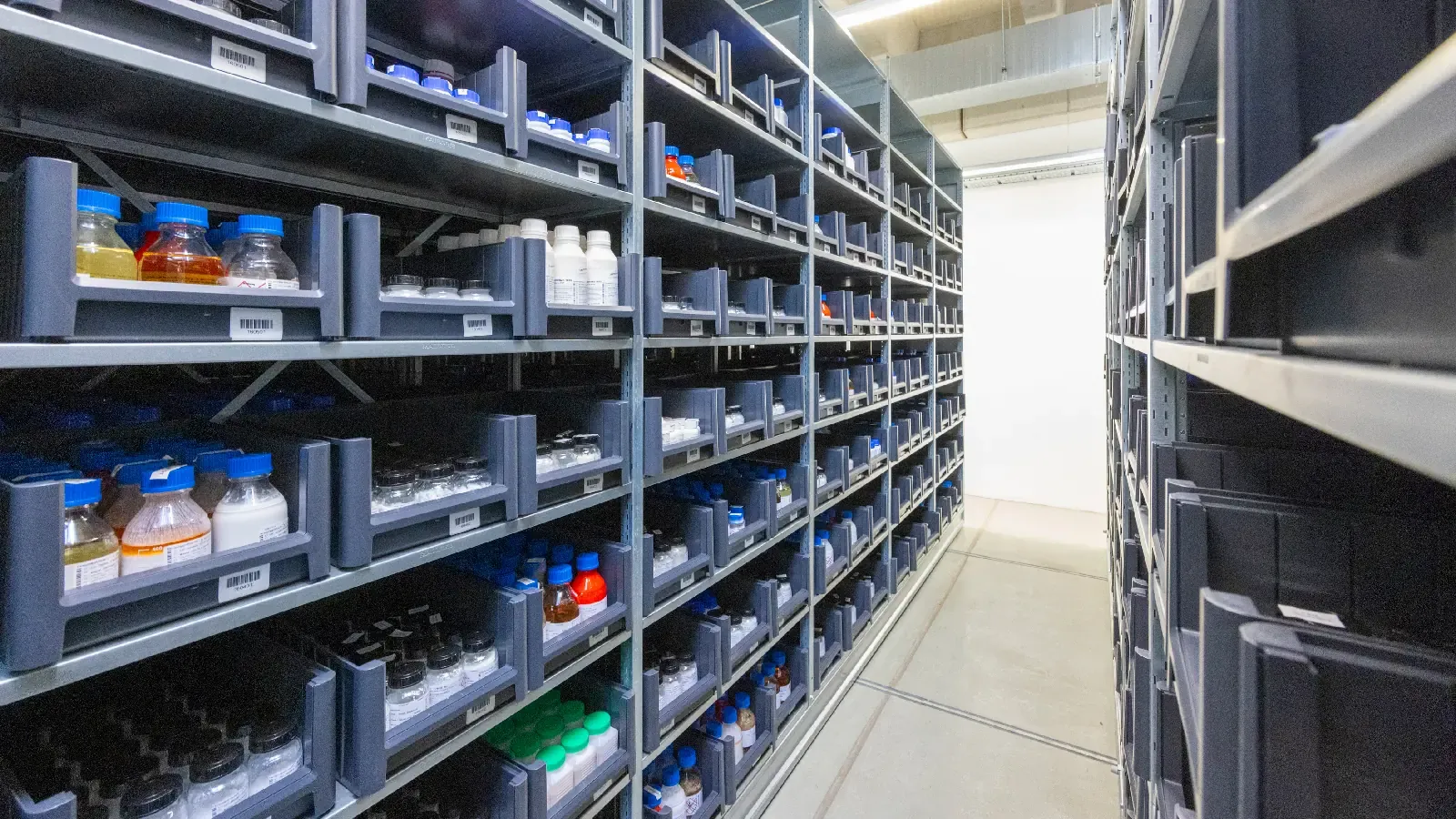
In storage and transport, environmental parameters are often critical for materials, goods, or technical assets.
Buildings and technical rooms
IoT can help monitor technical rooms, server areas, or building functions more effectively.
Sensitive areas
Wherever defined conditions must be maintained, environmental monitoring provides additional protection and transparency.
The role of an IoT System House
Environmental monitoring is comparatively accessible from a technical standpoint, but it still requires clean implementation and integration.
Selecting suitable sensor technology
The systems integrator helps define suitable sensors and measuring points.
Clean data paths
To turn measured values into usable information, transmission, storage, and analysis have to be right.
Integration into operations and reporting
A good partner ensures that the data is not only captured, but can also be used in day-to-day operations.
Which questions companies should clarify in advance
Before introducing IoT-based environmental monitoring, companies should answer a few questions.
Which values are truly relevant?
Not every possible measured variable makes sense. What matters is which parameters actually influence operations.
What alarm and response logic is needed?
Data is only valuable when it is clear how deviations will be acted upon.
Which sites or areas should be included?
Especially with multiple sites, defining the spatial scope is important.
How should the data be used?
The answer determines whether the solution is used purely operationally, for documentation, or strategically.
Conclusion
Environmental monitoring with IoT is a particularly practical and versatile entry point into industrial IoT solutions. It creates transparency, improves responsiveness, and supports quality, operations, and verifiability.