Why Infrastructure Is Crucial in the Industrial IoT
The Industrial IoT stands or falls on the quality of its underlying infrastructure. Sensors, machines, platforms, and line-of-business applications can only work together reliably if networks, connectivity, hosting, and operations are seamlessly coordinated. Especially in industrial environments with established facilities, heterogeneous systems, and high availability requirements, it becomes clear that infrastructure is not a peripheral issue, but rather the foundation of any resilient IoT architecture.
Infrastructure Is More Than Just Technology
When we talk about IT infrastructure in the IoT, we’re not just referring to hardware or server capacity. We’re referring to the entire technical foundation upon which data is collected, transmitted, processed, and utilized. This includes field devices, networks, platforms, data center structures, security mechanisms, and operational processes.
The Industrial Reality Is Heterogeneous
In practice, modern digital systems often encounter older equipment, proprietary protocols, and varying operational requirements. A good IoT infrastructure must accommodate this heterogeneity without introducing additional complexity. It must be stable enough to function in brownfield environments and flexible enough to accommodate new requirements.
Why a Lack of Architecture Quickly Becomes Expensive
If infrastructure is not carefully planned, media breaks, security vulnerabilities, and unnecessary operating costs can quickly arise. Individual solutions may work in pilot operations but are difficult to scale. Anyone looking to build an Industrial IoT solution for the long term therefore needs an architecture that is sustainable from the very beginning.
What Building Blocks Make Up an IoT Infrastructure
An industrial IoT infrastructure consists of several layers that must work together. Only when all components are properly integrated can a resilient overall architecture be created.
Field and Device Layers
At the foundation are sensors, machines, controllers, and gateways. They capture states, measured values, and events, forming the data foundation for later analysis. It is important that these devices can be reliably integrated into the overall system and remain maintainable in the long term.
Networks and Connectivity
The collected data must be transmitted securely and reliably. Networks, communication channels, and defined connections between machines, locations, and platforms are crucial for this. Depending on the requirements, local networks, cross-location connections, or hybrid models are used.
Data Centers and Hosting
Data requires a reliable location for processing and storage. Data center and hosting infrastructures form the backbone for platform operations, analysis, reporting, and other applications. Availability, security, and location considerations play a central role here.
Platform and Application Layer
Data is collected, analyzed, and made available for business applications on the platform. This is where dashboards, reports, alerts, and interfaces to other systems are generated. The platform must not only function technically but also be reliably usable during ongoing operations.
Security and Access Management
Every IoT infrastructure requires clear security mechanisms. These include segmentation, encryption, authorization models, monitoring, and logging. Security is not an afterthought here, but rather an integral part of the infrastructure itself.
Requirements That Industrial IoT Infrastructure Must Meet
An IoT infrastructure must do more than simply transmit data. It must function continuously in everyday industrial operations and meet multiple requirements simultaneously.
Availability
Industrial processes often rely on continuous data streams. Therefore, the infrastructure must be designed in such a way that outages can be avoided or quickly mitigated. Availability is not just a technical criterion, but an operational prerequisite.
Scalability
A system that works at one location is not automatically suitable for multiple plants. Good infrastructure is built in such a way that it can be expanded without having to be redesigned each time. This is particularly important for growing companies or cross-location rollouts.
Security
The more production and operational data are interconnected, the higher the requirements for protecting the infrastructure. This applies to access, communication, data storage, and operational processes. Security must therefore be embedded in the architecture from the outset.
Integration Capability
An industrial IoT infrastructure must interoperate with existing IT and OT systems. Different protocols, data sources, and operational logics must therefore be mapped into a common model. This is the only way to create usable end-to-end processes.
The Role of Edge Computing in the Industrial IoT
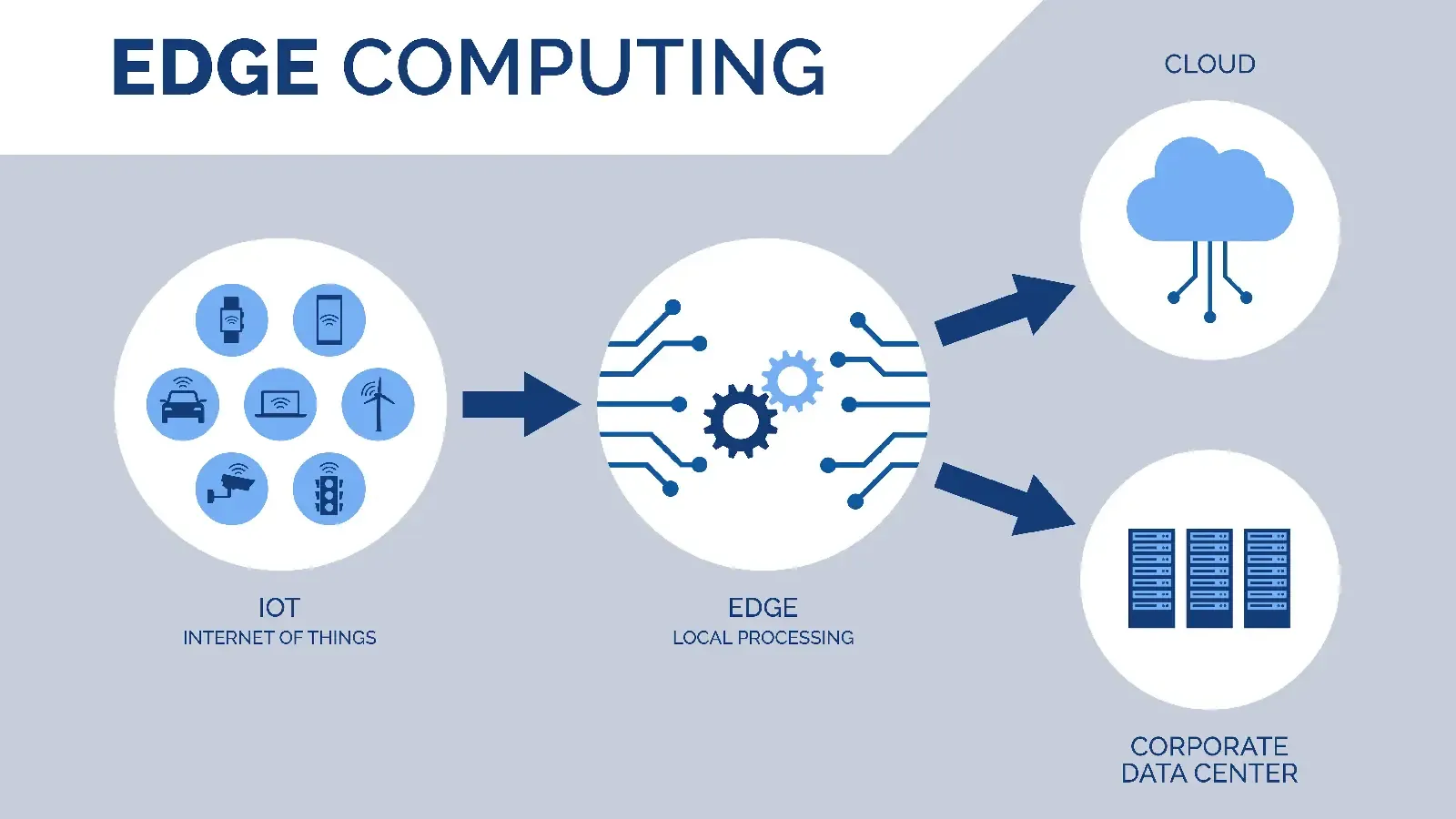
Edge computing is relevant wherever data must be processed as close to the source as possible. This is particularly important when latency, autonomy, or preprocessing are factors.
When edge computing makes sense
Edge computing is particularly useful when data cannot or should not be processed centrally first. This applies, for example, in cases requiring rapid response times, when bandwidth is limited, or when local decisions must be made.
Latency, preprocessing, and autonomy
Edge computing allows data to be filtered, aggregated, or analyzed on-site. This reduces the load on central systems and improves response times. In many industrial scenarios, this creates a better balance between local intelligence and central control.
Edge as Relief for Central Systems
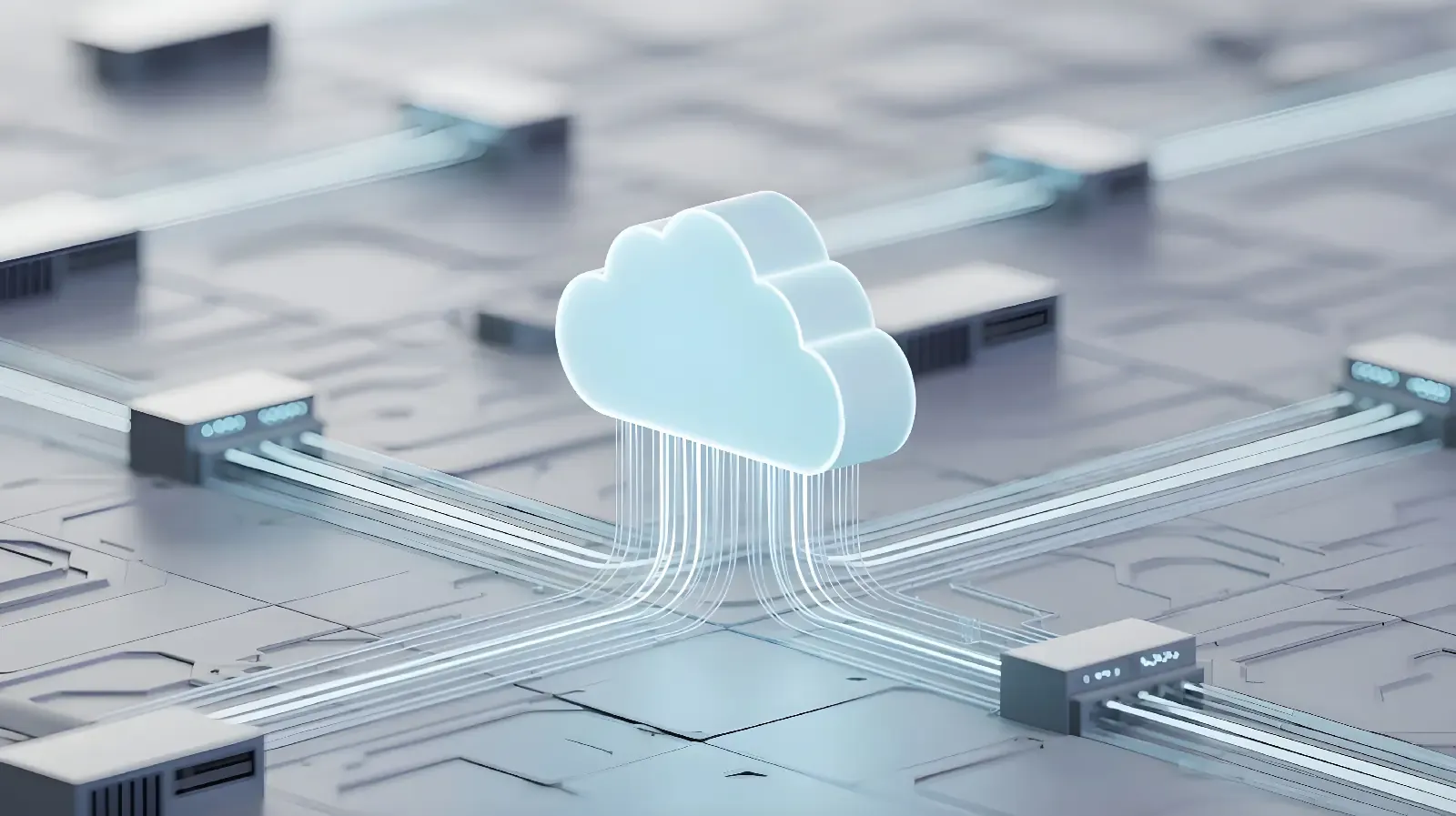
Edge complements central platforms but does not replace them. The architecture becomes more robust because not all data has to flow unfiltered into the cloud or the data center. This increases efficiency and can reduce operating costs.
The Role of the Cloud in Industrial IoT
The cloud is particularly relevant in Industrial IoT when scaling, centralized analysis, and flexible platform usage are key priorities.
Centralization and Scaling
Cloud structures make it easier to consolidate data from multiple sources and analyze it centrally. This is particularly useful when multiple locations, plants, or use cases need to be connected.
Hybrid Architectures
In many industrial environments, neither a purely cloud-based nor a purely on-premises solution is optimal. Hybrid architectures combine local edge components with centralized cloud or data center structures. This allows for a better balance between flexibility and control.
The Cloud as a Platform for Analysis and Operations
The cloud is well-suited for analysis, dashboards, reporting, and central services. However, it is important that the operating model aligns with the company’s security needs, availability requirements, and compliance standards.
The Role of Hosting and Data Centers
Hosting and data centers are the locations where IoT platforms and data processing are operated. For industrial applications, this is a critical component of the architecture.
Data Centers as Operational Anchors
The data center is where data is collected, stored, and processed. It thus serves as the operational anchor of the IoT solution and plays a key role in determining availability and stability.
Location, Governance, and Data Control
Companies often want to know exactly where their data is processed and under what conditions this occurs. Location, governance, and the operating model are therefore not only technical issues but also matters of trust.
Why the operating location is strategically important
Depending on the industry and requirements, a specific operating location can offer advantages in terms of security, data protection, compliance, and internal approval. A data center is thus not just infrastructure, but also a strategic decision-making factor.
Why Site Interconnection Is Important
Many industrial companies operate not just one site, but multiple plants, branches, or production facilities. Site networking then becomes the core of the IoT infrastructure.
Connecting Sites Securely
The connection between multiple sites must be secure, stable, and controllable. Only then can data be analyzed centrally and processes coordinated across sites.
Merging Production and Corporate Networks
Site networking is also important because production and corporate networks are often structured differently. A resilient architecture ensures that both worlds work together seamlessly without creating security or operational risks.
Multiple Plants, Centralized Control, and Scalability
When multiple plants are integrated into a shared infrastructure, the need for standardization and transparency increases. Site networking lays the foundation for scalability, centralized control, and consistent operating models.
How OT and IT Are Converged in Industrial Environments
OT and IT have different priorities, operational logics, and security requirements. Industrial IoT only works well when these worlds are seamlessly integrated.
Different Requirements of OT and IT
OT focuses on operational safety, availability, and plant logic. IT, on the other hand, places greater emphasis on standardization, scalability, and governance. A good infrastructure takes both perspectives into account.
Interfaces, Segmentation, and Operations
The connection between OT and IT requires clearly defined interfaces and proper segmentation. This is the only way to prevent production from being unnecessarily exposed or destabilized.
Why Integration Is Not Just a Technical Issue
OT/IT integration affects not only technology but also organization, accountability, and the operating model. That is why it must be incorporated into the architecture early on.
The Role of the IoT System Integrator
An IoT system integrator combines the individual infrastructure components into a functional overall architecture. It provides support for selection, implementation, and operation, and ensures that the infrastructure and use case are aligned.
Infrastructure as Part of the Overall System
Infrastructure must not be considered in isolation. It must align with the use case, security requirements, and operating model. The IoT system integrator ensures precisely this alignment.
Architecture, Implementation, and Operation from a Single Source
This approach is particularly valuable when a partner not only plans but also implements the solution and, if desired, supports operations. This creates end-to-end accountability throughout the entire lifecycle.
How the system integrator reduces complexity
A good system integrator helps translate technical, organizational, and security-related issues into a consistent model. This mitigates risks, reduces the effort required for interfaces, and facilitates scaling.
Questions Companies Should Clarify in Advance
Before setting up or modernizing an IoT infrastructure, companies should answer a few key questions:
- Which data sources should be connected?
- What are the availability and security requirements?
- How many locations or facilities should be integrated?
- What role should edge and cloud play?
- How should the solution be operated?
- Which OT and IT systems need to be integrated?
- What is the planned scale in the medium term?
The more clearly these questions are answered, the better the infrastructure can be adapted to actual needs.
Conclusion
IT infrastructure is essential for Industrial IoT to function effectively in day-to-day operations. Without a robust architecture comprising edge, cloud, hosting, site networking, OT/IT integration, and security, IoT often remains limited to pilot projects.
Therefore, anyone seeking to strategically build out Industrial IoT should not treat infrastructure as a peripheral issue, but rather understand it as the central foundation for availability, scalability, and operational reliability.