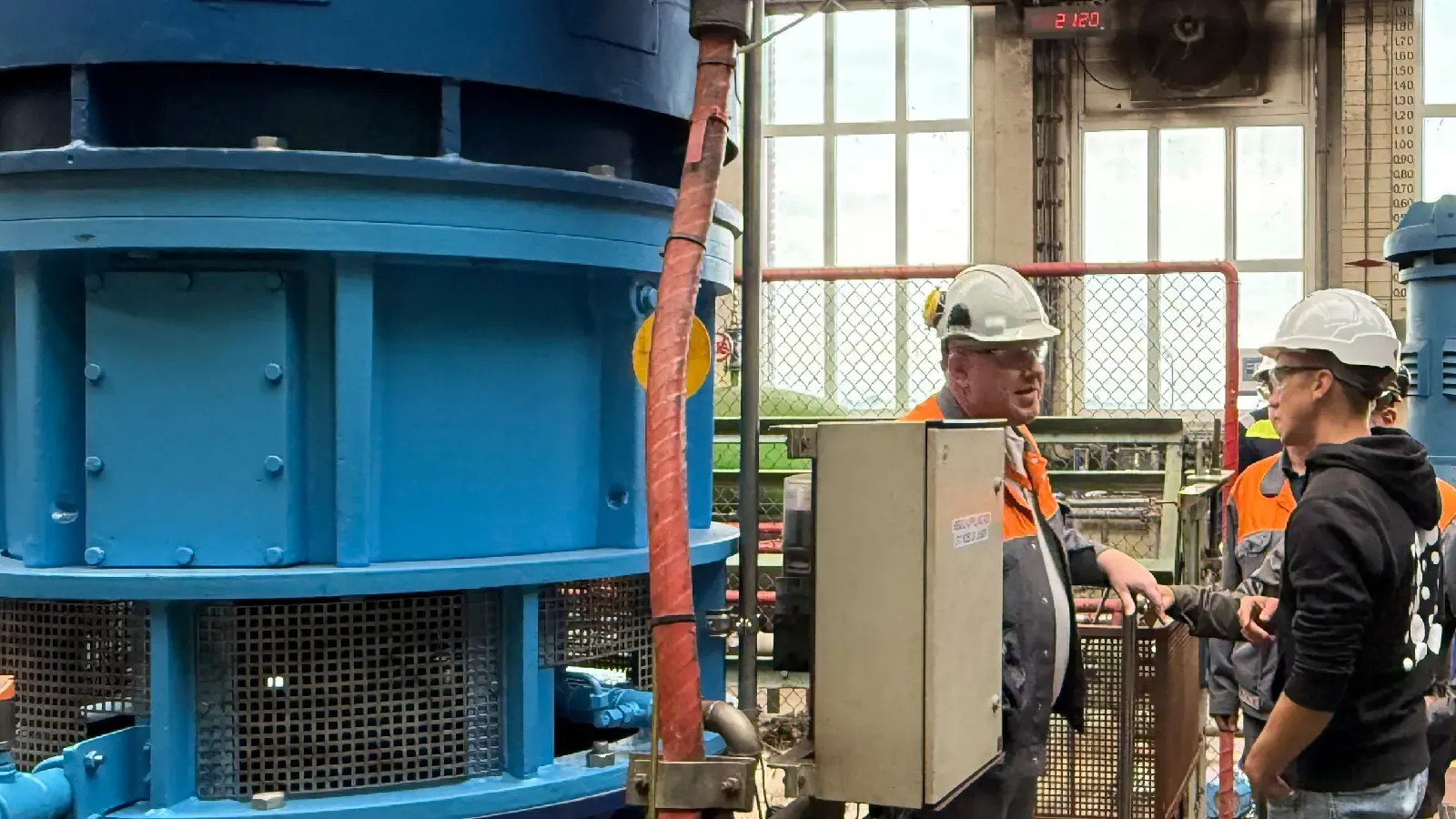
As soon as an industrial company operates multiple plants, locations, or production environments, the logic behind IoT changes significantly. It is no longer just a matter of making a single piece of equipment or a single area visible, but rather of collecting, comparing, and leveraging data across all locations. This is exactly where IoT solutions for multi-site companies come into play.
The added value lies primarily in consistency, transparency, and controllability. By connecting multiple sites with similar data, metrics, and processes, companies can better identify differences, establish benchmarks, and roll out improvements in a more targeted manner.
Why Multi-Site IoT Is Especially Relevant
In many industrial companies, the greatest potential lies not in a single location, but in comparing and coordinating multiple locations.
Creating Comparability
When multiple plants collect similar data, differences in performance, consumption, or condition can be more easily identified.
Standardizing processes
A common IoT structure helps align locations methodologically and organizationally.
Enabling Centralized Control
Management and functional departments gain a comprehensive view of the distributed structure. This improves decision-making and prioritization.
What Defines a Multi-Site IoT Solution
An IoT solution for multiple sites must do more than just collect data. It must standardize data, make it comparable, and prepare it for centralized use.
Uniform Data Base
To ensure that locations can be meaningfully compared, data must be collected and defined consistently.
Centralized Analysis
The information should be consolidated into a single platform. This is the only way to achieve true transparency.
Location-Specific Differentiation
Despite a centralized view, local characteristics must remain visible. A good solution combines both.
What Advantages Multi-Site IoT Offers
Greater transparency
Companies can identify deviations or areas of potential more quickly.
Comparable metrics
Standardized data provides the foundation for site comparisons and internal benchmarks.
Scalable Control
What works at one location can be applied to others if the structure and logic are comparable.
More Efficient Decisions
Management and departments no longer have to make decisions in isolation based on site-specific information; instead, they can access shared data.
Typical use cases in multi-site structures
Energy and consumption monitoring
Comparisons between locations help identify potential savings and anomalies more effectively.
Environmental and Site Monitoring
When multiple plants collect similar environmental data, conditions and risks can be compared more effectively.
Equipment Condition and Maintenance
Condition data can also be analyzed across locations to identify patterns and priorities.
Dashboard and Reporting Logic
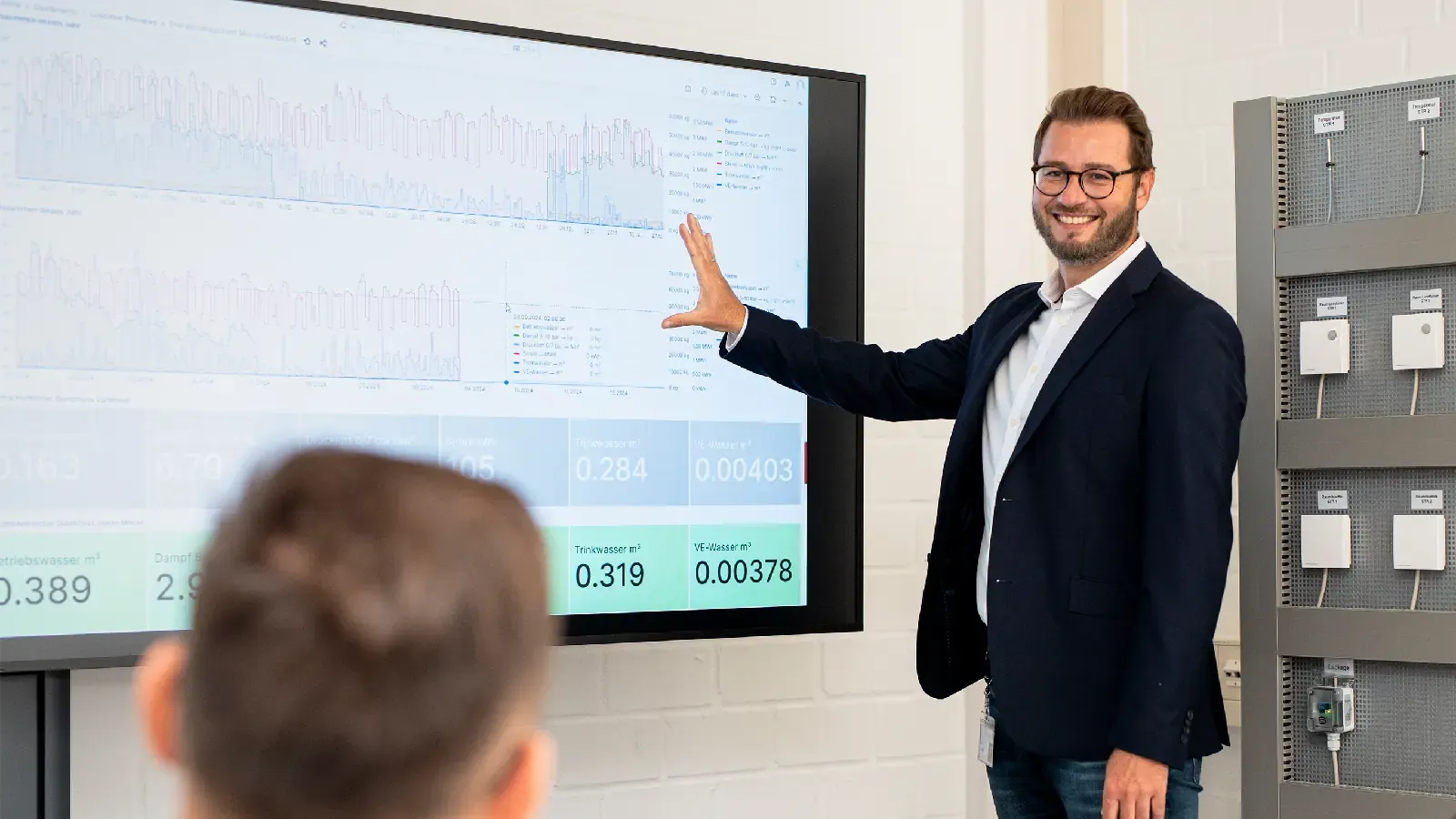
Multi-site IoT benefits particularly from visualized metrics that are prepared across sites.
Challenges Associated with Multi-Site Projects
Varying Levels of Maturity
Not every location is at the same level of digital maturity. This complicates standardization and rollout.
Heterogeneous Systems
Technical differences between locations make standardization challenging.
Different Responsibilities
Multi-site IoT requires clear delineation of responsibilities between central management and local implementation.
Balance between standardization and flexibility
The solution must be comparable while still taking local requirements into account.
How this article differs from other cluster topics
More than just site connectivity
The technical interconnection of sites is an infrastructure issue. Here, the focus is on the application level and the benefits in a multi-site context.
Not just a single use case
Energy, monitoring, or predictive maintenance can be part of the solution, but are not treated in isolation.
Focus on Control and Scaling
This article frames the multi-site perspective as an organizational and strategic level.
The Role of the IoT System House
Standardization Across Locations
The system integrator helps establish uniform structures and data logic.
Rollout Planning
A good partner supports the expansion from pilot sites to additional plants.
Aligning Central and Local Requirements
The solution must be practical for both headquarters and the individual sites.
Questions Companies Should Clarify in Advance
Which sites are relevant first?
Not every location needs to be integrated at the same time.
Which metrics should be comparable?
A common data logic is crucial for future benefits.
How much centralization makes sense?
The solution should be as centralized as necessary and as localized as sensible.
Which processes should be standardized?
Without a clear view of processes, the multi-site solution remains purely technical.
Conclusion
IoT solutions for multi-site companies create transparency, comparability, and better control across multiple plants. They are particularly relevant for industrial companies that want to not only optimize individual facilities but also improve standards and decision-making across all sites.
*