Unplanned downtime is one of the most expensive problems in industrial production. When machines or plants fail, the result is not only repair costs but often production losses, delivery delays, and additional organizational effort. Predictive maintenance with vibration sensors addresses exactly this issue: instead of reacting only once a defect occurs, changes in condition are detected early and maintenance measures are initiated in good time.
Vibration sensors are particularly well suited to rotating or mechanically stressed components such as motors, pumps, bearings, or gearboxes. They deliver data from which patterns, deviations, and potential wear trends can be derived. This makes maintenance more plannable, more precise, and more cost-effective.
What predictive maintenance means
Predictive maintenance describes a maintenance approach in which condition data is used to better forecast future maintenance requirements. The goal is to prevent failures before they occur.
Maintenance based on data
Instead of relying solely on fixed intervals or subjective assessments, maintenance is aligned with real measured values. This increases the accuracy and relevance of interventions.
Early detection of problems
Deviations in asset behavior can indicate wear or malfunctions. When these become visible early, measures can be planned in good time.
Better use of resources
Predictive maintenance helps deploy maintenance more precisely. This reduces unnecessary interventions and allows critical cases to be prioritized.
Why vibration sensors are so important
Vibrations are often a very early indicator of mechanical problems. Particularly with rotating components, a change in vibration characteristics can point to imbalance, bearing issues, or other faults.
Early signals of wear
Many types of damage announce themselves through changes in vibration behavior. Those who capture this data can react early.
Suitable for many types of assets
Vibration sensors can be used in many industrial environments, for example on motors, pumps, fans, bearings, or gearboxes. This makes the range of applications broad.
Highly practical
The relationship between vibration and machine condition is easy to understand for maintenance and production teams. This facilitates acceptance and implementation.
What benefits predictive maintenance offers
The benefits lie not only in the technology but above all in the operational value.
Fewer unplanned shutdowns
When problems are detected early, failures can often be avoided or better managed in terms of timing. This reduces production interruptions.
More targeted maintenance
Maintenance can take place when it is genuinely needed. This avoids unnecessary interventions and increases efficiency.
Better plannability
Maintenance, spare parts planning, and staff deployment can be better aligned with actual needs. This improves operational management.
Higher asset availability
The earlier a problem is detected, the lower the risk of major damage. This directly benefits availability.
Which assets are particularly suitable
Not every machine needs predictive maintenance right away, but many assets benefit significantly from it.
Rotating machinery
Motors, pumps, fans, and gearboxes are classic use cases, because their mechanical condition can be measured well via vibration.
Critical production assets
When a failure directly affects production, the benefit is especially high. This is where predictive maintenance often pays off fastest.
Assets with high maintenance effort
When maintenance is required regularly or wear is hard to plan for, condition monitoring can make a big difference.
Brownfield environments
Use is often worthwhile for existing assets as well, because installed systems can be monitored step by step.
What the difference to condition monitoring is
The two terms are often mentioned together, but they do not describe exactly the same thing.
Condition monitoring as the basis
Condition monitoring means monitoring the current state of machines or components. It provides transparency about the here and now.
Predictive maintenance as the next level
Predictive maintenance goes further and seeks to derive statements about future maintenance requirements from condition data.
Both approaches complement each other
In practice, much begins with condition monitoring and then develops toward predictive maintenance. That is why the clusters should be clearly separated but clearly linked to one another.
What role data analysis and visualization play
Sensors alone are not enough. Only through analysis and visualization does the data become actionable.
Identifying patterns
Vibration data can reveal changes and anomalies that may indicate malfunctions.
Making trends visible
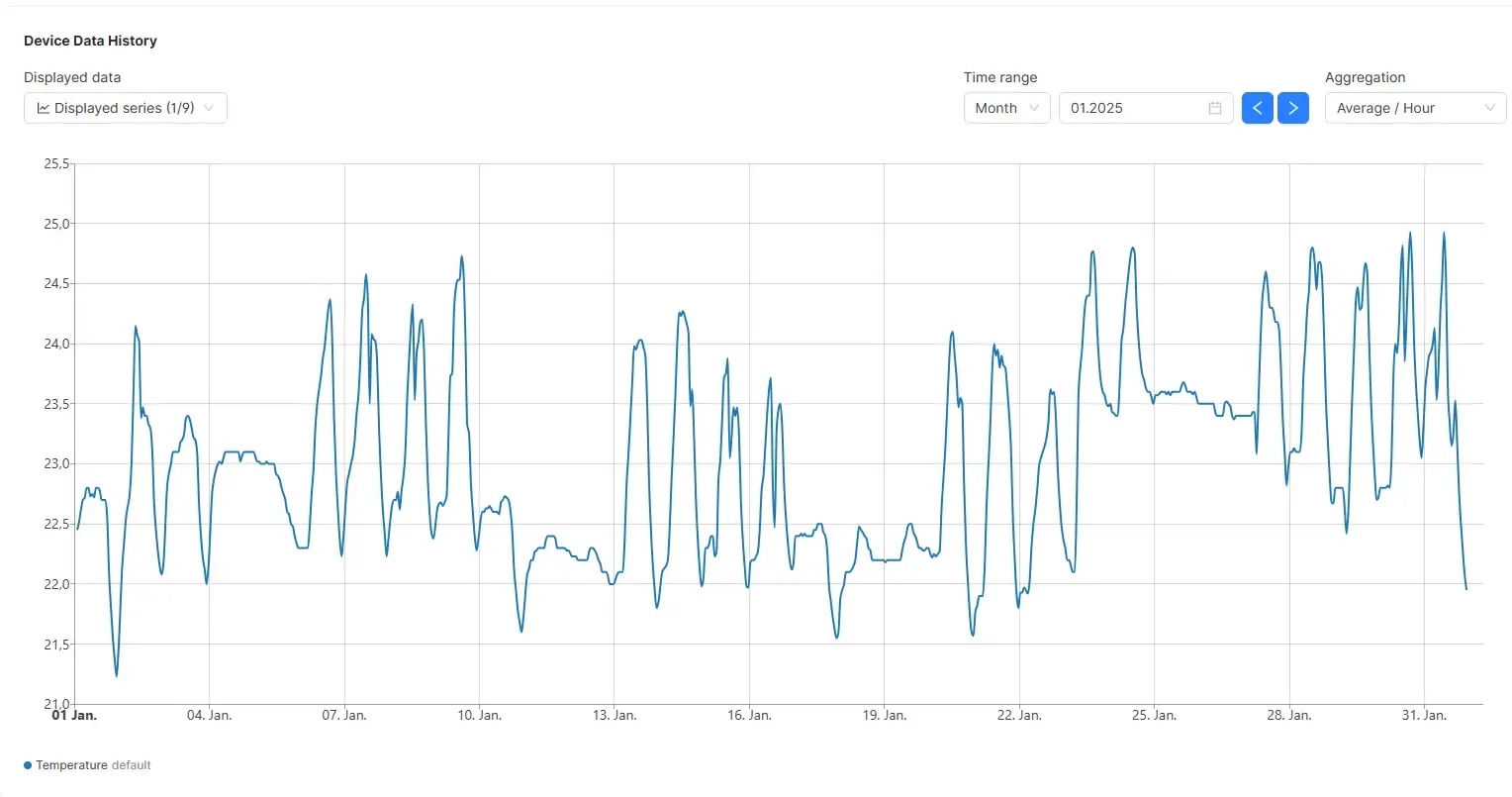
Historical data helps to understand developments over time. This makes wear behavior easier to trace.
Setting alarms and priorities
When limit values or anomalies are detected, maintenance measures can be triggered or prioritized in a targeted way.
What role the IoT System House plays
Predictive maintenance is a use case, but it requires sound technical and organizational implementation.
Selecting the right sensors
The systems integrator helps define suitable sensors, measuring points, and data paths.
Turning data into usable processes
Measured values must not only be captured but also integrated into maintenance and operating processes.
From pilot to scale-up
A good partner helps turn a successful individual use case into a repeatable solution for additional assets.
Which questions companies should clarify in advance
Before getting started with predictive maintenance, companies should answer a few key questions.
Which assets are truly critical?
Not every machine needs the same depth of monitoring. Prioritization is decisive.
Which faults should be detected?
The clearer the objective, the better the sensors and analysis can be defined.
How should alerts be handled?
A good concept requires clear response paths for maintenance and operations.
How is the benefit measured?
Key figures such as downtime reduction, maintenance effort, or availability help evaluate success.
Conclusion
Predictive maintenance with vibration sensors is one of the strongest industrial IoT use cases, because it has a direct impact on availability, costs, and efficiency. It combines technical measurement with tangible operational value and is therefore especially relevant for maintenance and production.
*