Industrial IoT systems must not only function properly, but also remain stable even when individual components fail or connections are interrupted. This is precisely where high availability and resilience come into play. They ensure that critical data flows, platforms, and processes continue to run even during disruptions or can be quickly restored.
This is particularly important in an industrial setting because outages can have a direct impact on production, transparency, and operational safety. Anyone who wants to successfully establish an Industrial IoT system in the long term must therefore consider early on how the infrastructure will respond to disruptions and how it will achieve reliability.
Why Availability Is So Important in Industrial IoT
Industrial IoT is often part of core operational processes. When systems fail, it’s not just data that’s affected—production, maintenance, monitoring, or the basis for decision-making may also be impacted.
IoT supports ongoing operations
IoT provides information needed for control, analysis, and transparency in operations. If the infrastructure fails, important data is missing or processes are interrupted.
Interruptions Have a Direct Impact
Even brief disruptions can prevent alarms, reports, or cross-site analyses from functioning reliably. This increases operational uncertainty.
Availability Is a Key Purchasing Criterion
Many companies evaluate IoT solutions not only based on functionality but, above all, on stability and operational reliability. Availability is therefore a central selection criterion.
What High Availability Means in the IoT
High availability describes a system’s ability to remain functional even when individual components fail. In the Industrial IoT, this applies to hardware, software, networks, data centers, and operational processes.
Redundancy Instead of Single Points of Failure
A high-availability architecture avoids individual critical vulnerabilities. Where possible, components, connections, or services are duplicated or secured multiple times.
Mitigating Failures Without Total System Failure
The goal is not to prevent every failure, but to limit the impact of a failure. This ensures that the overall system remains operational.
Restart and Recovery
Resilience also includes the ability to quickly return to a stable state after an incident. This includes backup, failover, and recovery strategies.
Which components support high availability
A resilient IoT infrastructure consists of several measures that work together. High availability is not a single product, but an architectural principle.
Redundant Infrastructure
This includes dual-redundant systems, network connections, or platform components. Redundancy helps mitigate the impact of individual component failures.
Distributed architecture
When components are operated at different locations or across multiple zones, risks can be better distributed. This is particularly relevant for sites, data centers, and platform operations.
Monitoring and Early Warning
Only when disruptions are detected early can a rapid response be initiated. Monitoring is therefore a central component of high availability.
Planned Recovery Processes
A good system requires defined processes for failover, restore, and recovery. Without these processes, resilience remains theoretical.
Why Resilience Is More Than Redundancy
Resilience goes beyond purely technical safeguards. It describes a system’s ability to remain robust even under changing conditions and to respond to disruptions in a controlled manner.
Operational Robustness
A resilient IoT system remains functional even when subcomponents fail or connections are temporarily disrupted.
Adaptability
Resilience also means that the system can adapt to changing conditions. This applies, for example, to peak loads, site expansions, or technical changes.
Recovery Capability
A resilient system must quickly return to full operability after an incident. This requires not only technology but also clear operational processes.
The Role of Hosting, the Cloud, and the Edge
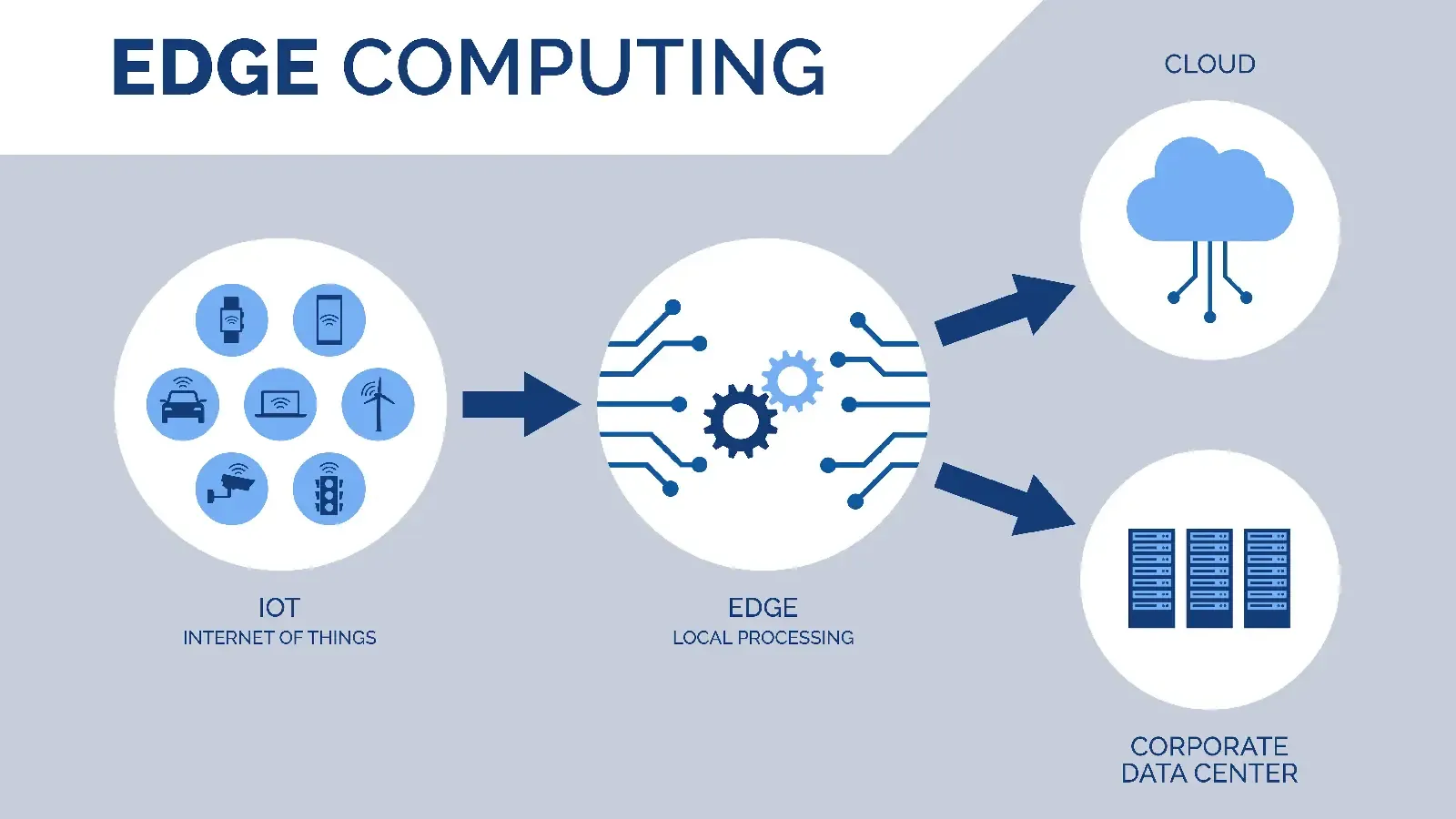
High availability depends heavily on how hosting, the cloud, and the edge interact within the architecture. These building blocks influence distribution, fault tolerance, and operational stability.
Hosting as a Stable Operational Foundation
A reliable hosting and data center infrastructure is crucial for the availability of the IoT platform. It forms the technical foundation for core services.
The Cloud as a Scalable Complement
The cloud can help make systems more flexible and distributable. However, it does not replace a sound availability strategy—rather, it is part of it.
The Edge as Local Protection
The edge can take over important functions locally if central connections fail or are delayed. This increases autonomy and protects operations from complete interruptions.
Why Site Networking and OT/IT Integration Are Relevant
High availability is not just a matter of individual systems, but also of the connections between sites and system environments.
Site Networking as a Factor in Availability
When multiple plants are connected to one another, these connections must be stable and fail-safe. Otherwise, cross-site IoT usage will come to a standstill.
OT/IT Integration Must Be Robust
The connection between the production environment and corporate IT must not become a single point of failure. That is why the integration architecture also requires an availability strategy.
Securing Critical Interfaces
Interfaces between local, central, and external components are particularly sensitive. Availability and recovery should be specifically planned for these areas.
The role of the IoT System House in this process
An IoT System House helps not only to plan high availability from a technical standpoint but also to embed it as an integral part of the overall architecture. This applies to infrastructure, operations, monitoring, and recovery.
Planning for Contingencies
A good system integrator plans not only for normal operations but also for failure scenarios. It designs the architecture to limit and control disruptions.
Operating Model and Responsibilities
High availability only works if it is clear who monitors, who intervenes, and who restores systems. The systems integrator can clearly define these responsibilities with the customer.
Integrating Technology and Operations
Resilience arises from the interplay of architecture, monitoring, processes, and responsibilities. This is precisely the strength of an integrated system integrator approach.
Questions Companies Should Clarify in Advance
Before implementing high-availability concepts, companies should answer the following questions:
Which systems are critical?
Not all parts of the infrastructure require the same level of reliability. It is important to identify the critical components.
What recovery times are acceptable?
Depending on the application, a short or longer outage may be tolerable. These target values influence the architectural design.
Which redundancies make economic sense?
Not every component needs to be duplicated. The key is determining where the business benefits of redundancy justify the costs.
Who bears operational responsibility?
Without clear responsibilities, high availability remains incomplete. Monitoring, response, and recovery must be clearly defined.
Conclusion
High availability and resilience are key success factors for industrial IoT systems. They ensure that data flows, platforms, and processes remain stable or are quickly restored even in the event of disruptions or outages.
Anyone seeking to professionally implement Industrial IoT should not treat availability as an additional requirement, but rather as an integral part of the architecture. Only then can a resilient, reliable, and scalable overall system be created.