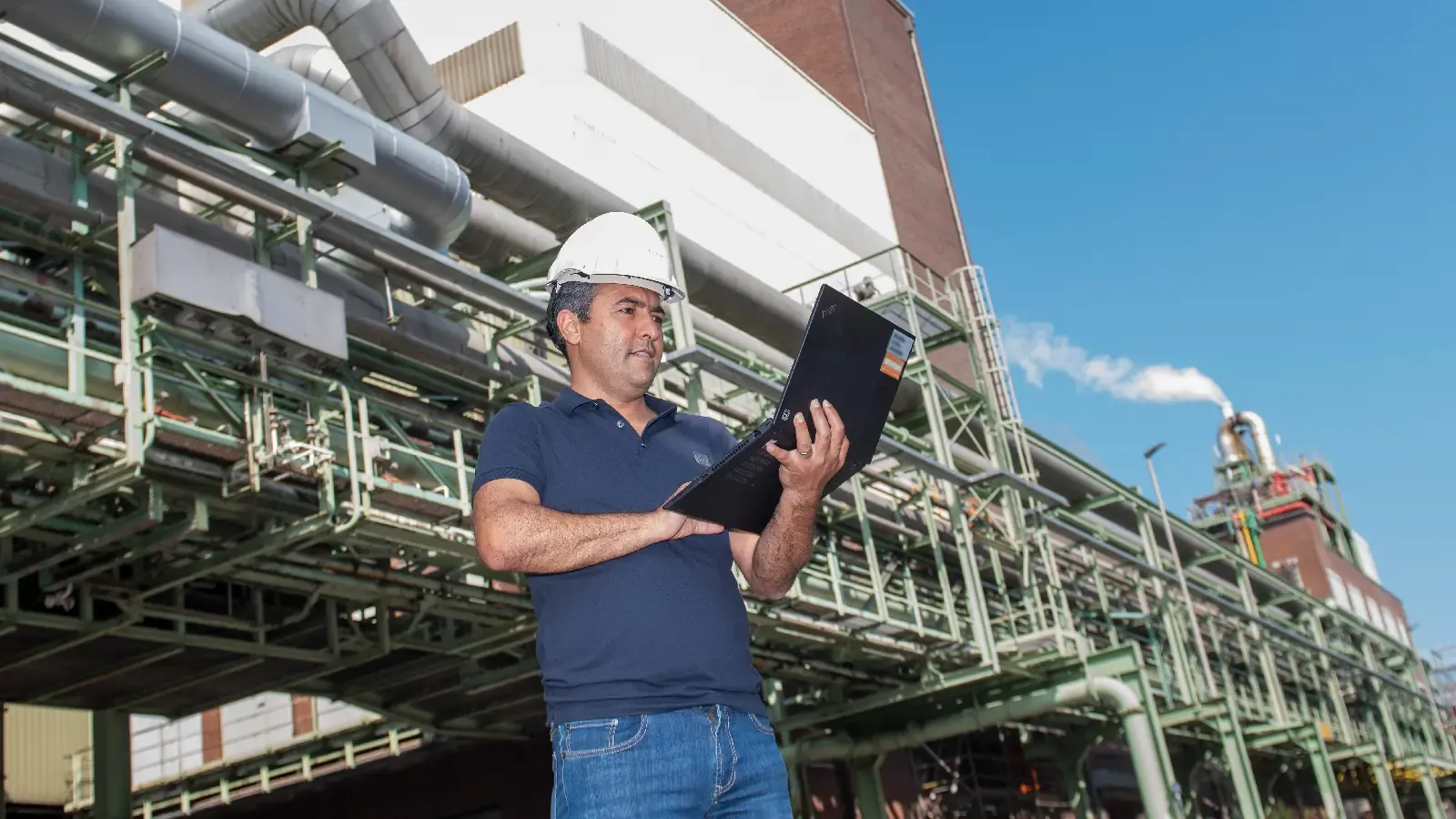
In an industrial setting, OT and IT are two distinct worlds with different requirements, priorities, and operational logics. While OT focuses primarily on availability, process safety, and plant stability, IT is more concerned with standardization, governance, and data processing. The Industrial IoT can only function sustainably if these two areas are meaningfully integrated.
OT/IT integration is therefore a key issue for modern industrial companies. It determines how data from production flows into IT systems, how processes are networked, and how security, operations, and scaling are organized. Anyone looking to implement the Industrial IoT needs a clear integration architecture to do so.
Why OT and IT Must Be Integrated
The increasing digitization of industrial processes is making the separation between OT and IT less and less practical. Today, data from machines, plants, and production lines often needs to be connected to enterprise systems, analytics platforms, or reporting solutions.
Industrial processes generate relevant data
Modern production continuously generates data that should not only be used locally but also analyzed centrally. Without OT/IT integration, much of this information remains trapped in isolated systems.
IoT makes this connection inevitable
IoT is based precisely on this connection. Sensors, controllers, platforms, and specialized applications must work together within a common architecture.
Separation Causes Friction and Losses
When OT and IT remain separate, this often results in data silos, manual workarounds, and limited transparency. This hampers efficiency and makes scalable solutions difficult to implement.
What Sets OT and IT Apart
To integrate OT and IT seamlessly, one must understand their different logics. Only then can viable interfaces and operating models be developed.
OT is process- and plant-oriented
OT is geared toward the safe and stable operation of machines, control systems, and production processes. Availability, latency, and operational safety are the top priorities here.
IT thinks in terms of systems and data
IT focuses on data processing, standardization, networks, platforms, and governance. The emphasis here is on scalability, security, and integrability.
The two worlds complement each other
OT provides the production-related data and processes, while IT provides the infrastructure for processing and structuring them. Together, this results in a resilient industrial IoT architecture.
Typical Challenges in Integration
Connecting OT and IT is challenging because both worlds have different technical and organizational frameworks.
Different Priorities
In OT, stable production operations are often more important than technical standardization. In IT, on the other hand, governance, security, and centralized control are the top priorities. These priorities must be balanced.
Different Technologies
OT and IT often use different protocols, systems, and operating models. Successful integration must bridge these differences without destabilizing the existing environments.
Different Areas of Responsibility
It is not uncommon for OT and IT to be organizationally separate. This leads to unclear responsibilities when systems are to be connected. That is why integration also requires a clear governance model.
Key Architectural Principles for OT/IT Integration
Effective integration is not based on individual solutions, but on clear architectural principles.
Segmentation
OT and IT networks should not be intermingled in an uncontrolled manner. Segmentation helps control access and minimize risks.
Defined Interfaces
The connection between OT and IT should be established via clearly defined interfaces. This makes data flows controllable and allows for better planning of maintenance and operations.
Security from the Start
The integration must be designed so that security requirements are taken into account right from the architecture stage. This applies to both technical measures and operational processes.
Scalability
A good integration architecture should be transferable to additional locations, facilities, or data sources. Otherwise, the solution remains a one-off special project.
The Role of Edge, Cloud, and Hosting in Integration
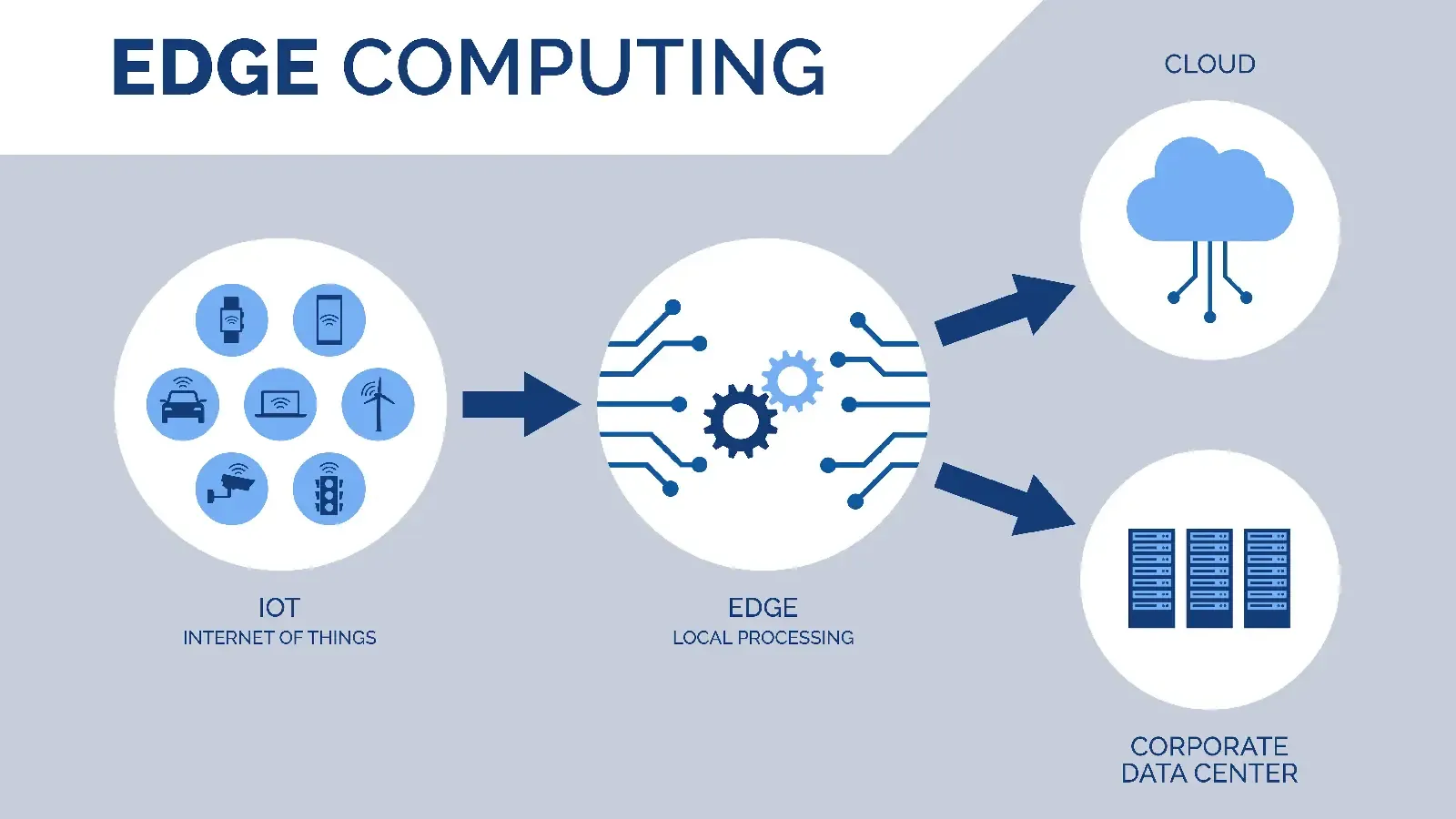
OT/IT integration usually does not function as a purely direct connection between a machine and an enterprise system. In practice, edge, cloud, and hosting handle important intermediate steps.
Edge as a Local Processing Layer
Edge can preprocess, filter, or aggregate data from OT before it is passed on to IT systems. This simplifies integration and reduces the load on central systems.
The Cloud as a Central Processing and Analysis Layer
The cloud can serve as a central platform for cross-site evaluation and data processing. It complements the local OT environment with a scalable IT structure.
Hosting as the Operational Foundation
Hosting and data centers provide the technical foundation for platforms, applications, and central services. This brings together data from OT and IT in a controlled environment.
The Role of the IoT System House
An IoT System House can design OT/IT integration as part of a holistic infrastructure and operational architecture. It helps to align technical and organizational requirements.
Architecture Instead of Connection at Any Cost
A good system integrator does not simply connect OT and IT directly, but develops a suitable architecture with clear interfaces and security mechanisms.
Understanding Both Operational Logics
It is crucial that the system integrator understands both production requirements and IT requirements. Only then can a solution be developed that works both technically and operationally.
Operation and Responsibility
Integration must not only be implemented but also operated on an ongoing basis. The system integrator helps define responsibilities, monitoring, maintenance processes, and escalation procedures so that the solution remains viable in day-to-day operations.
Questions Companies Should Clarify in Advance
Before integrating OT and IT, companies should answer a few key questions:
What data should flow between OT and IT?
Not all production information needs to be transferred to the IT environment. It is important to clarify which data is to be used for operational, analytical, or strategic purposes.
Which systems need to be integrated?
The answer to this question determines the architecture of the interfaces. Typical systems include machine controls, historians, MES, ERP, and reporting or analytics platforms.
What security and operational requirements apply?
Depending on the industry and use case, these requirements can vary greatly. They influence segmentation, access permissions, monitoring, and operations.
Who is responsible?
Without a clear assignment of responsibility, operational gaps can quickly arise. Therefore, roles, responsibilities, and decision-making processes must be defined in advance.
Conclusion
OT/IT integration is a fundamental prerequisite for Industrial IoT. Only when the production environment and enterprise IT are meaningfully connected can end-to-end data flows, greater transparency, and scalable digital processes be achieved.
The greatest challenge lies not in the purely technical connection, but in the interplay of architecture, operations, security, and governance. Careful planning across these levels creates a robust foundation for industrial digitalization.