In the Industrial IoT, hosting and data centers are much more than just technical infrastructure in the background. They serve as the location where data is processed, stored, and made available to applications. As such, they directly influence the availability, security, and operational capability of the entire IoT solution.
In industrial environments, choosing the right hosting model is not just a technical decision, but also an organizational and strategic one. Companies must determine where their data is stored, how it is managed, and what requirements apply in terms of stability and governance.
Why Hosting Is a Strategic Issue in Industrial IoT
The Industrial IoT generates sensitive data that is often critical to operations. This data must not only be processed technically but also managed in a reliable and traceable manner. That is why the hosting model is a key factor for long-term success.
Hosting Determines the Location Where Data Is Processed
Where data is stored and processed influences governance, compliance, and trust. Especially in industrial companies, the location of data processing is often a key decision-making criterion.
Hosting affects availability and stability
A reliable hosting model ensures that IoT platforms and applications can be operated stably. This is particularly relevant when the data is incorporated into operational processes or reports.
Hosting is part of the infrastructure concept
Hosting should not be viewed in isolation. It is a building block of the overall architecture and is closely linked to networks, platforms, security, and operational processes.
The Role of the Data Center in IoT
The data center is the physical or organizational location where computing power, storage, and platform operations converge. In Industrial IoT, it serves as the central operational hub for many solutions.
The Data Center as the Technical Backbone
In the data center, data is collected, processed, and made available for line-of-business applications. It is thus the backbone of central IoT processing.
The Data Center as a Trusted Environment
Companies expect their data to be processed in a controlled environment. The data center creates this framework through clear operational standards, security mechanisms, and transparent lines of responsibility.
Data Centers and Platform Operations Go Hand in Hand
The IoT platform is only as resilient as the environment in which it operates. Data centers and platform operations must therefore be considered as a single unit, not as separate issues.
What Requirements a Hosting Model Must Meet
For hosting to work in the Industrial IoT, it must meet several requirements simultaneously. These requirements go beyond traditional IT criteria.
Availability
IoT applications often rely on continuous data availability. Hosting must therefore be designed to ensure that platforms and interfaces are consistently accessible.
Security
Operational and process data require a secure environment. Hosting must therefore adequately secure access, storage, transmission, and operation.
Scalability
As the IoT solution grows, the hosting must be able to scale accordingly. This applies to additional data sources, more locations, or new applications.
Governance and Traceability
Companies need transparency regarding who operates the hosting, where the data is processed, and which rules apply. This is particularly important for compliance and internal approvals.
Which Hosting Models Are Relevant in the Industrial IoT
Depending on the requirements, different hosting models may be suitable. The choice depends on security needs, data location, operating model, and scaling goals.
On-Premises Hosting
In the on-premises model, systems remain within the company or under direct corporate control. This can be beneficial when maximum transparency and control are desired.
External Hosting
External hosting provides professional operational structures outside the company. It can be a good option when availability, standardization, and reducing the burden on internal operations are the top priorities.
Hybrid Models
In industrial practice, a hybrid approach is often the best choice. This combines local components with centrally managed hosting structures, allowing for a better balance between control and scalability.
Regional or National Operating Locations
For many companies, not only the technical quality but also the location of the hosting is relevant. Regional or national operating locations can offer advantages in terms of governance, trust, and regulatory compliance.
Why Location Issues Are So Important in Hosting
The location where IoT data is processed is a key decision-making criterion for many companies. It influences trust, approval processes, and the organizational integration of the solution.
Data Location and Control
Companies often want to know exactly where their data is processed and under what legal and organizational conditions this takes place. This is particularly important in sensitive or regulated environments.
Proximity to Operational Requirements
A hosting model is most effective when it aligns with internal operational, security, and governance requirements. Location and operating model should therefore be considered together.
Relevance for Compliance and Auditability
A clearly defined hosting location facilitates internal coordination, security reviews, and external audits. This builds trust and reduces approval risks.
How Hosting, Cloud, and Edge Are Interconnected
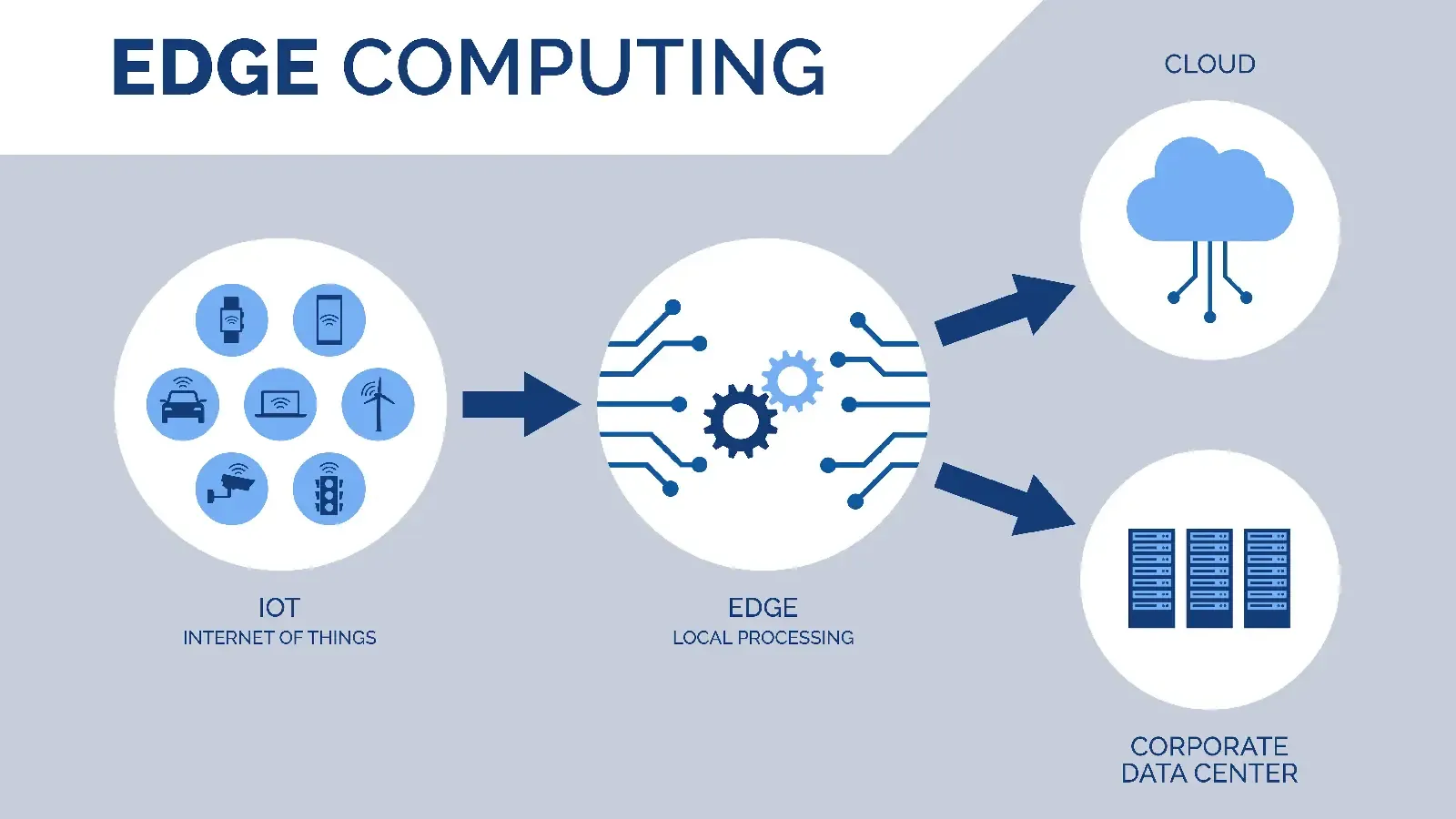
Hosting is closely linked to the cloud and the edge, but fulfills its own distinct function within the architecture. While the edge handles local processing and the cloud is often used for scaling and centralized analysis, hosting provides the operational environment in which platforms and data storage are anchored.
Hosting as an Operational Foundation
Hosting provides the concrete technical and organizational foundation for platform operations. It creates the environment in which IoT applications can run.
The Cloud as an Operational and Usage Model
The term “cloud” often refers to the usage and deployment model, while “hosting” refers to the actual infrastructure and operational environment. These two levels should be clearly distinguished from one another.
Edge as a Local Complement
Edge is the local processing layer for time-critical or data-intensive tasks. Hosting complements this local layer with centralized operational capabilities and systematic data processing.
The Role of the IoT System Provider
An IoT system provider helps ensure that hosting and data centers are not treated as isolated services, but rather as integral components of the IoT infrastructure. It evaluates which model is best suited to the specific use case and how operations and security can be organized effectively.
Architecture Instead of Individual Components
A good IoT System House considers hosting in the context of the platform, security, connectivity, and operating model. This results in a consistent infrastructure rather than a collection of individual products.
Operating Model and Responsibility
The system integrator can help clearly define responsibilities for hosting, monitoring, maintenance, and support. This clarity is crucial, especially in the Industrial IoT.
Connection to Other Infrastructure Topics
Hosting must be considered in conjunction with site networking, OT/IT integration, and availability requirements. Only then will the solution be resilient in the long term.
Questions Companies Should Clarify in Advance
Before selecting a hosting model, companies should answer a few key questions:
Where should the data be processed?
The desired location affects security, governance, and approval processes. This question should be clarified early on.
What are the requirements for availability and scalability?
The hosting model must align with expected growth and operational criticality.
How much internal operational responsibility should remain?
Depending on the model, operations can be organized entirely in-house, externally, or through a hybrid approach. This decision has a direct impact on the architecture.
What security and compliance requirements apply?
The hosting solution must be compatible with the company’s internal requirements and, where applicable, regulatory requirements.
Conclusion
Hosting and data centers are central elements of industrial IoT architectures. They determine where data is processed, how stable platforms run, and what framework conditions apply to security and governance.
Anyone seeking to professionally implement Industrial IoT should not treat hosting as a purely operational issue, but rather as a strategic component of the overall architecture. Only then can availability, trust, and scalability be sustainably ensured.