Many industrial companies today operate not just one location, but multiple plants, production facilities, or branches. For Industrial IoT to function reliably in such structures, these locations must be securely and efficiently interconnected. Site connectivity is therefore a key prerequisite for scalable IoT architectures.
In everyday industrial operations, this involves not only the technical interconnection of networks but also availability, security, governance, and the ability to make data usable across locations. Effective site connectivity lays the foundation for central platforms, local systems, and operational processes to work together.
Why Site Networking Is So Important in the Industrial IoT
In the Industrial IoT, site networking is not merely an infrastructure detail. It plays a decisive role in determining whether data can be analyzed centrally, systems integrated, and processes controlled across multiple plants.
Multiple Sites Mean Greater Complexity
As soon as multiple plants or facilities are integrated, the demands on network architecture, operations, and security concepts increase. Different local conditions, technologies, and areas of responsibility must be brought together.
The IoT Requires Cross-Site Data Flows
Many industrial IoT applications only realize their full potential when data from multiple sites is consolidated. This applies, for example, to analytics, monitoring, reporting, or comparisons between plants.
Site-to-Site Connectivity Is Part of Scalability
A solution that works at a single site is not automatically suitable for a distributed enterprise. Site-to-site connectivity transforms a local project into a scalable infrastructure.
Requirements for site-to-site connectivity
For site-to-site connectivity to work in the Industrial IoT, it must meet several requirements simultaneously. These requirements relate to technology, security, and operations.
Availability
The connection between sites must be stable and reliable. If data transmission is regularly interrupted, the usability of the IoT solution suffers immediately.
Performance
Depending on the application, companies need fast and robust data transmission. This is especially true when central platforms need to access up-to-date information across multiple locations.
Security
Connections between locations must be controlled, segmented, and secured. Open or unstructured connections unnecessarily increase the risk.
Scalability
The network architecture should be designed so that new locations or facilities can be easily connected later. This is important for growing or internationally operating companies.
Which Site Networking Models Are Relevant
Depending on the company’s structure and technical requirements, different site-to-site networking models may be appropriate.
Point-to-Point Connections
For individual, clearly defined sites, a direct connection may be appropriate. However, this model is usually only suitable for smaller or very specific architectures.
Centralized Site Connectivity
When multiple facilities are connected to a central platform or data center, a hub-oriented model is created. This facilitates centralized control and governance.
Mesh or Multi-Site Structures
In larger organizations, it may make sense to network sites with each other or via shared network nodes. This increases flexibility but also places higher demands on architecture and operations.
Hybrid Site Networking
Often, a combination of local, central, and cloud-based components is the most sensible solution. This allows for better alignment with varying requirements for response time, security, and scalability.
Why Site Networking for IoT Is More Than Just Network Technology
Site networking is not just a concern for network architects. It affects a company’s entire infrastructure and operational model.
Connecting OT and IT
Locations typically contain both production-related and enterprise-wide systems. Networking must therefore take the requirements of both worlds into account without creating unnecessary risks.
Central Platforms Need Stable Connections
When data is analyzed across locations in an IoT platform, the quality of the results depends on the quality of the site connections.
Governance and Responsibilities
Who is authorized to connect which sites? Who monitors the connection? Who responds to disruptions? Such questions are just as important for site networking as the technical implementation.
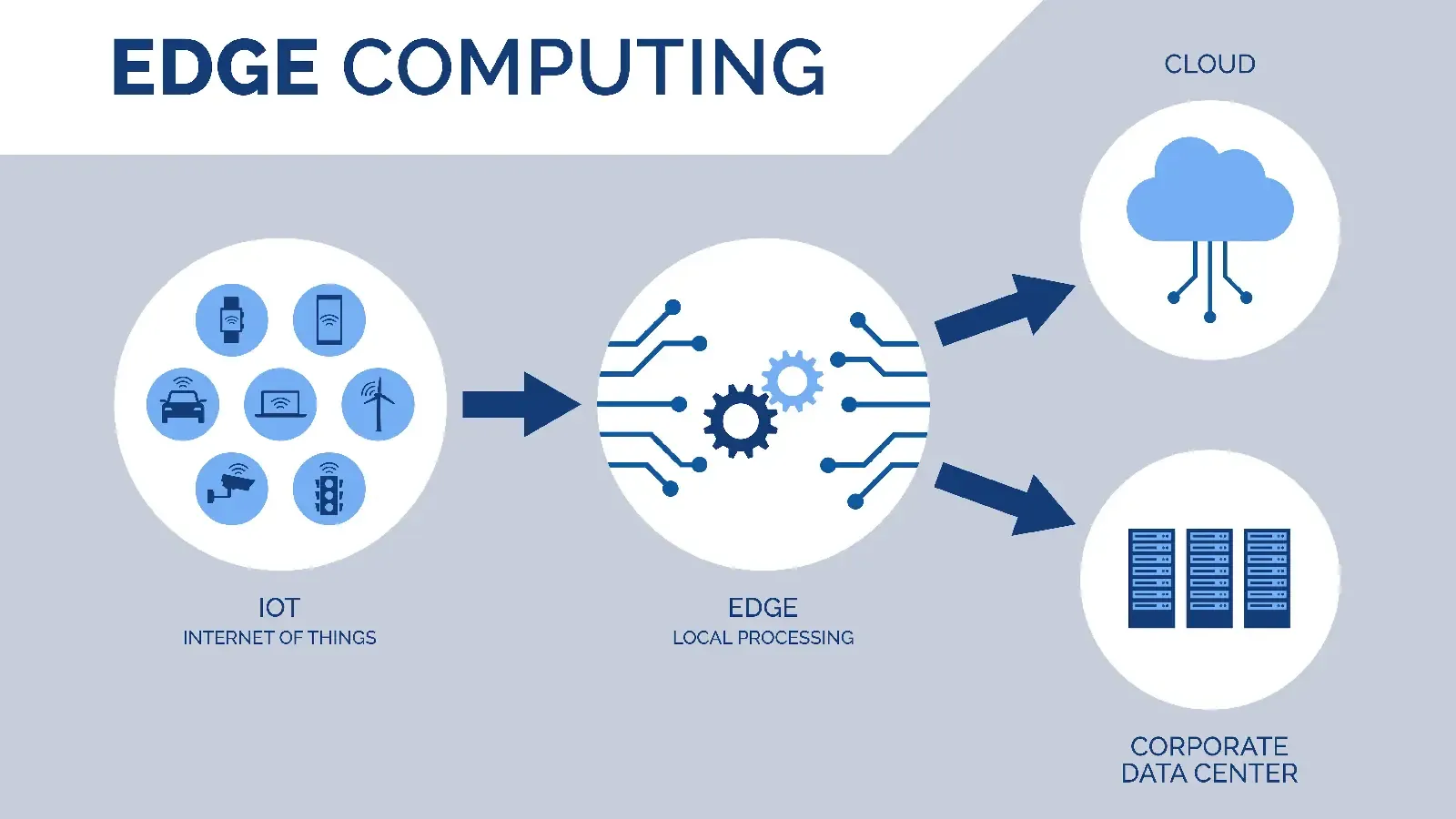
The Role of Edge, Cloud, and Hosting in Site Networking
Site networking is closely linked to other infrastructure components. Coordination with edge, cloud, and hosting is particularly important.
Edge as a Local Offload
Edge can preprocess data close to the site, thereby reducing the demands on central connections. This is particularly useful when not all raw data needs to be transported centrally.
The cloud as a central hub
The cloud is well-suited as an overarching platform that consolidates data from multiple locations. This makes site networking a building block of a cross-regional architecture.
Hosting as a Stable Operational Foundation
Site networking requires a reliable environment for platform operation, data storage, and central services. Hosting and data centers form the operational foundation for this.
Which Security Aspects Are Particularly Important
Connecting multiple locations significantly increases security requirements. The greater the scope, the more important segmented and controlled connections become.
Segmentation
Not every location should be able to communicate freely with every other location. Segmentation creates controlled connections and reduces risks.
Access Control
There must be clear rules regarding who is authorized to establish, modify, or monitor which connections. This applies to both operational and administrative access.
Monitoring and Fault Detection
Site connections must be monitored so that disruptions can be detected early. Especially in the IoT context, transparency regarding connection quality and outages is crucial.
The Role of the IoT System House
An IoT System House ensures that site networking is not treated as an isolated networking issue, but rather as part of the overall Industrial IoT architecture. It integrates technical, organizational, and operational requirements.
Architecture Instead of a Stand-Alone Solution
A good IoT System House plans site networking not only at the network level but also in the context of the platform, security, hosting, and operations.
Scalability and Standardization
When multiple locations are to be integrated, repeatable and standardized patterns are needed. The system integrator helps define and implement these patterns.
Linking Infrastructure and Operations
Site networking can only function sustainably if operations, monitoring, and responsibilities are clearly defined. This is precisely where an integrated approach is particularly valuable.
Questions Companies Should Clarify in Advance
Before setting up or modernizing a site network, companies should answer a few key questions:
How many sites are to be connected?
The number and geographic distribution of the sites significantly influence the choice of architectural model.
What data needs to be available across locations?
Not all data needs to be transmitted centrally. It is important to clarify which information should actually be shared.
What are the requirements for security and availability?
Depending on the industry and operating model, these requirements can vary widely and have a significant impact on the network architecture.
Who is responsible for operations and monitoring?
Without clear lines of responsibility, site networking can quickly become confusing. Operations and responsibilities must therefore be defined from the outset.
Conclusion
Site networking is a key prerequisite for Industrial IoT in companies with multiple plants or facilities. It connects local sites to central platforms and lays the foundation for scalable, secure, and usable data flows.
Those who strategically plan site networking not only define networks but also lay the foundation for a comprehensive Industrial IoT architecture. This is precisely what transforms a local project into a resilient infrastructure.