Industrial IoT infrastructures connect machines, sensors, locations, platforms, and enterprise systems. However, it is precisely this connectivity that also creates new risks. That is why security in the Industrial IoT is not an afterthought, but a fundamental prerequisite for secure and resilient operations.
Segmentation is a central component of this security architecture. It ensures that not all systems within a network can communicate with one another unchecked, but rather that data is exchanged in a controlled manner through individual, isolated segments. Segmentation serves both to reduce the attack surface and to control and isolate critical and sensitive areas. Anyone seeking to professionally implement the Industrial IoT must therefore consider security and segmentation from the very beginning.
Why Security Is So Important in the Industrial IoT
As digitalization increases, so does the attack surface of industrial environments. Where individual machines and local networks once dominated, today’s industrial IoT features interconnected structures with multiple entry and access points, as well as platforms and data flows.
More Connectivity Means More Risks
Every additional connection can be a potential attack vector. In the Industrial IoT in particular, therefore, not only devices but also communication channels and platforms must be secured.
Security Incidents Affect Operations
In industrial settings, security issues are not merely IT matters. They can directly impact production, availability, and data integrity. For this reason, security always involves a perspective that extends beyond operational considerations to encompass processes and the organizational context.
Trust is a key factor
Companies will only invest in IoT solutions if they can trust that these will be operated securely. Security is therefore also a prerequisite for internal approvals and long-term acceptance, as well as a guarantee for increased efficiency through digitalization.
What Segmentation Means in the IoT
Segmentation means that networks, systems, and functions are divided into clearly separated and function-oriented areas. This separation prevents a problem or an attack from spreading unchecked across the entire infrastructure.
Logical Separation of Areas
In an industrial IoT architecture, for example, production networks, administrative networks, platforms, and external access points can be organized separately from one another. This makes communication manageable.
Protection Through Access Restriction
Not every system needs to be able to communicate with every other system. Segmentation restricts access and thereby reduces the risk of uncontrolled traffic within the network.
Segmentation Provides Clarity
When the infrastructure is divided into clearly defined zones, operations also become more transparent. Responsibilities, monitoring, and error analysis can be organized much more effectively.
What Security Components an IoT Infrastructure Needs
Security in industrial IoT infrastructures consists of several interlocking measures. Segmentation is a central element, but not the only protection mechanism.
Access Control
Only authorized persons and systems may access the infrastructure. This requires clear role models, authentication, and authorization management.
Encryption
Sensitive data should be protected both during transmission and while in storage. Encryption is a fundamental protection mechanism for IoT communication.
Monitoring and Logging
Security-related events must be traceable. Monitoring and logging help detect anomalies early and analyze incidents thoroughly.
Patch and Lifecycle Management
IoT components must also be regularly updated and maintained. Without structured lifecycle management, avoidable security vulnerabilities arise over time—and it is important to understand that IIoT devices require a fundamentally different approach to device management.
Why Segmentation Is Especially Important in the Industrial IoT
In industrial environments, different system ecosystems often intersect. Segmentation helps to separate these ecosystems (OT & IT) from one another in a controlled manner and connect them securely.
Protecting OT and IT Areas
Production networks and corporate IT operate according to different principles. Segmentation ensures that these areas remain separate but can collaborate in a defined manner when necessary.
Limiting the Spread of Risks
If one area is compromised, the problem must not spread unchecked to the entire infrastructure. Segmentation helps isolate attacks and limit damage.
Ensuring Availability
Industrial systems must remain not only secure but also stable. Segmentation supports availability by reducing uncontrolled interactions between systems.
The Role of Networks, Hosting, and the Cloud
Security and segmentation must be considered at all levels of the infrastructure. This applies to networks as well as hosting and cloud environments.
Networks as the First Line of Defense
Network architecture plays a decisive role in determining how secure and controllable the infrastructure is. Clearly defined connections and separations are crucial here.
Securing Hosting and Data Centers
The platforms’ operating environment must also be segmented and protected. Hosting is therefore not only an operational factor but also a security factor.
Securely Integrating the Cloud
The cloud can be useful in the Industrial IoT, but it must be embedded in a security strategy. Segmentation remains a central principle there as well.
How Segmentation Relates to Edge and OT/IT Integration
Edge and OT/IT integration are particularly relevant when production data needs to be transferred securely and in a controlled manner to IT systems.
The Edge as a Controlled Transfer Point
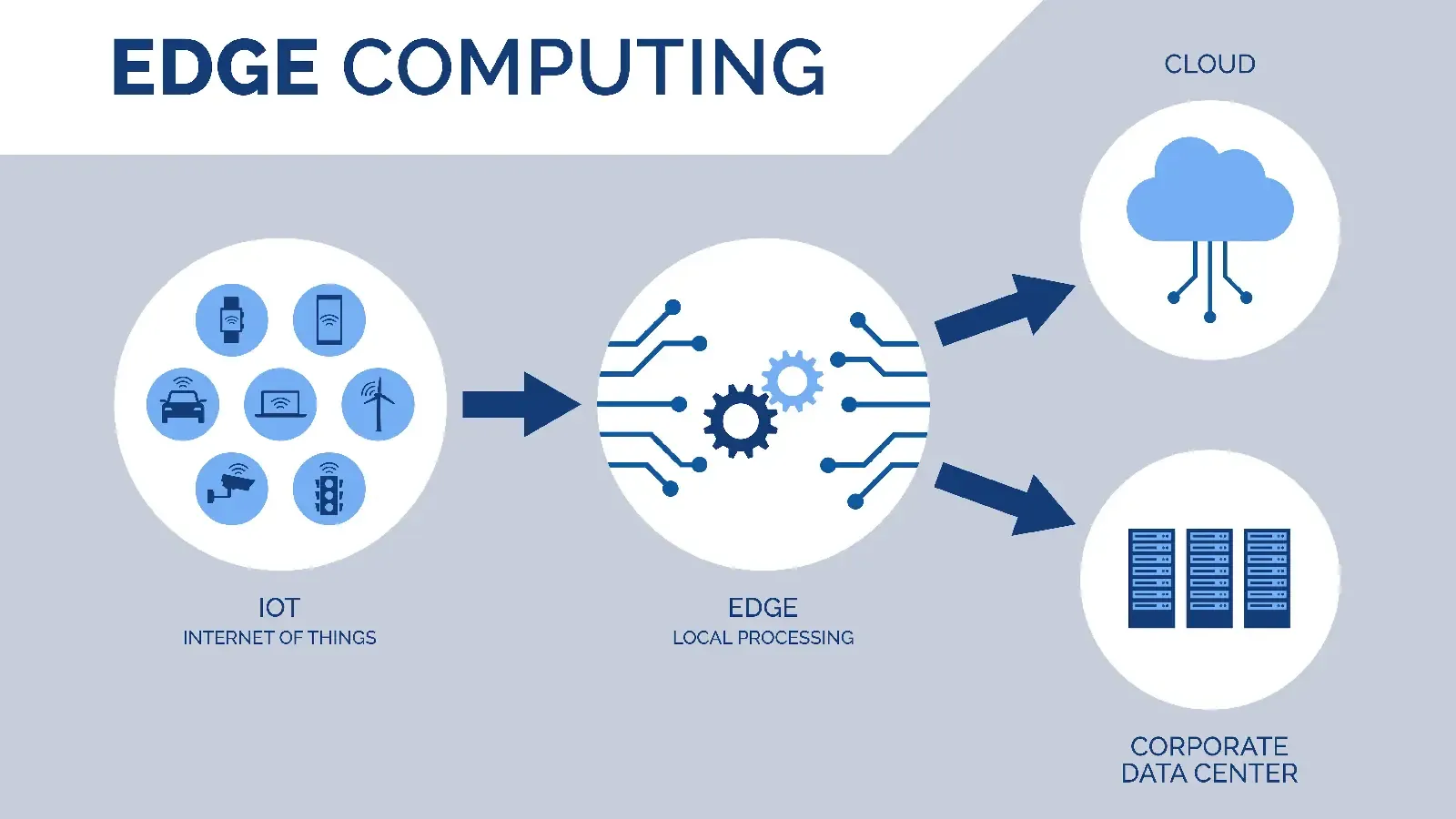
The edge can serve as a local processing layer where data is first aggregated, verified, and routed according to function before it reaches downstream systems. This supports the security architecture.
OT/IT integration requires clear boundaries
The connection between OT and IT is only viable if it occurs via defined interfaces and segmented areas. Direct, uncontrolled data transfers should be avoided.
Secure Data Flows Instead of Open Connections
Security does not result from connecting everything together, but rather from consciously designing and managing the right connections. This is precisely where segmentation is particularly valuable.
The Role of the IoT System House
An IoT System House can not only implement security and segmentation from a technical standpoint but also integrate them into the overall architecture. This makes security an integral part of the infrastructure model from the very beginning.
Architecture with Security Logic
A good system integrator does not plan security measures as an afterthought but incorporates them into the architecture from the start. This applies to networks, platforms, hosting, and interfaces.
Linking Technology and Operations
Security can only function effectively in the long term if operations, monitoring, and responsibilities are clearly defined. The system integrator can help bridge the gap between the organizational and technical aspects.
Holistic View of Risks
The system integrator views the entire infrastructure as a self-contained, functional ecosystem and thereby identifies risks from the outset—both at the interfaces between OT, IT, the cloud, hosting, and site networking, as well as across the entirety of organizational processes.
Questions Companies Should Clarify in Advance
Before establishing a security architecture for IoT, companies should answer a few key questions:
Which areas need to be segregated?
Not all systems should be treated the same. It must be determined which zones, networks, and functions need to be separated from one another.
What access rights are truly necessary?
The more clearly access rights are defined, the lower the security risk. Not every connection is automatically necessary.
How are incidents detected and handled?
Effective security requires monitoring, logging, and clear response processes and procedures. These mechanisms must be planned from the outset.
Who is responsible for operations and security?
Without clear responsibilities, security remains incomplete. Therefore, technical and organizational responsibilities should be defined early on.
Conclusion
Security and segmentation are the cornerstones of every industrial IoT infrastructure. They protect not only data and systems, but also availability, operations, and trust. Without clear separation, controlled access, and robust security processes, any digitalization initiative—as well as the Industrial IoT as a whole—will quickly become a risk rather than a value driver.
Anyone who wants to build IoT infrastructures professionally should therefore not view security as an afterthought, but as an integral part of the architecture. This is precisely the prerequisite for resilient and scalable industrial solutions.