In Industrial IoT, a data center is far more than a place to store data. It forms the technical and organizational foundation for platform operations, data processing, scaling, and security. The more critical the application, the more important a reliable operating environment for data and applications becomes.
For industrial IoT solutions, the question is therefore not only which data is collected, but above all where and how this data is processed, stored, and made available. This is precisely where the data center plays a central role.
Why the data center is so important in IoT
Industrial IoT continuously generates data from machines, sensors, assets, and processes. This information must not only be captured, but also reliably processed, analyzed, and made usable for business applications. Without a stable data center structure, this process cannot be implemented dependably.
The data center as an operational anchor
In many IoT architectures, the data center is the place where data converges, is evaluated, and is transferred into dashboards, reports, or alarm systems. It is therefore a central operational anchor for the entire solution.
Data needs a controlled location
Industrial companies need to know where their operational data is processed and under which conditions operations take place. A clean data center concept creates transparency and reduces uncertainty for IT, OT, and compliance.
Not just storage, but active infrastructure
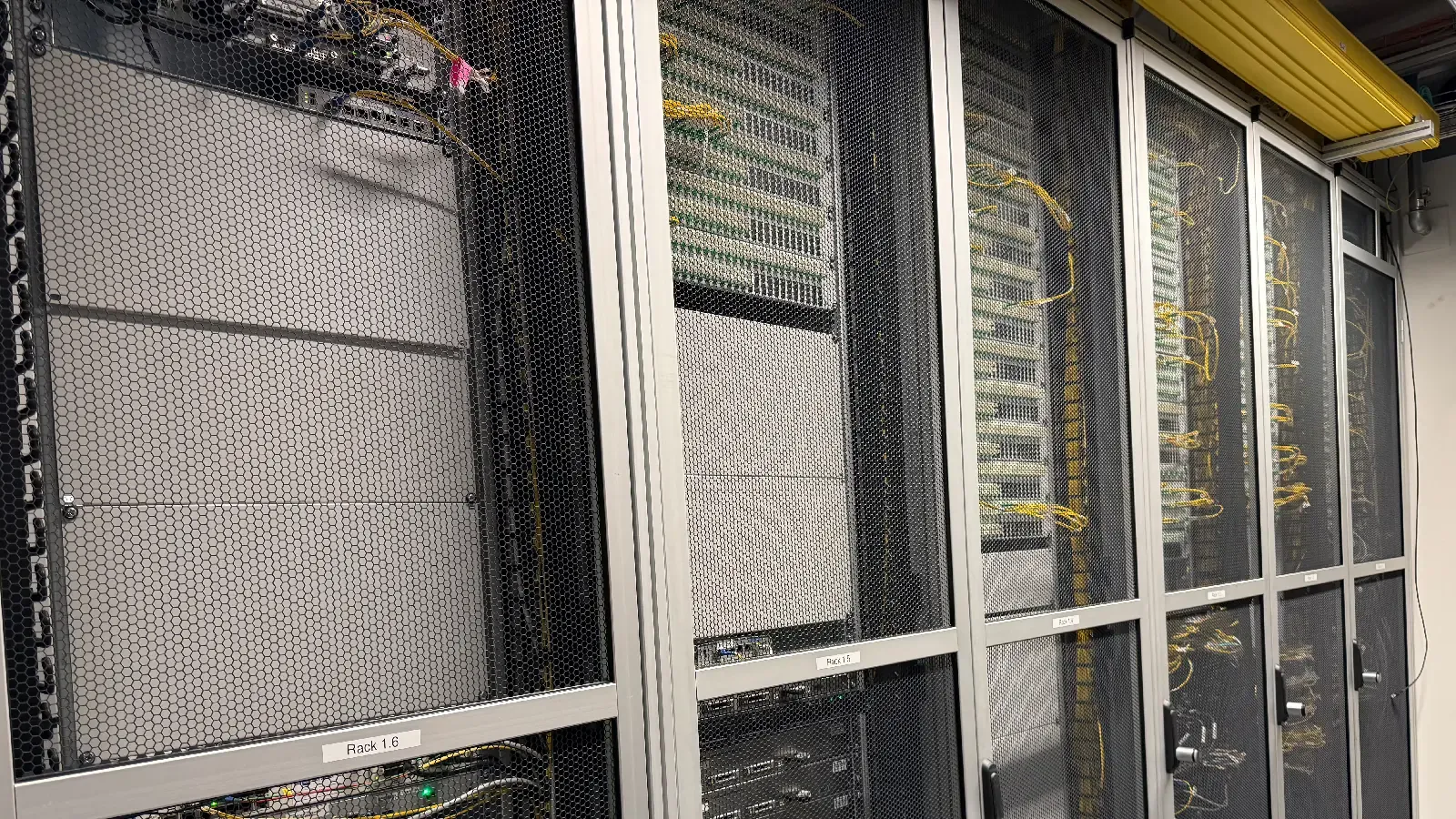
A data center is not merely a storage location. It provides computing power, availability, security, backup structures, and operational capability. IoT applications with multiple data streams and business applications in particular require this active infrastructure.
What requirements industrial IoT solutions place on a data center
Industrial IoT places different demands on data centers than pure office IT. The infrastructure must operate reliably, scalably, and securely over the long term while also fitting into existing operational processes.
Availability
IoT applications often depend on continuous data streams. Interruptions can impair monitoring, alerting, or reporting. The data center must therefore be designed for high availability.
Scalability
Once a solution has proven itself, it is often meant to be extended to additional assets, plants, or use cases. The data center must therefore be designed so that additional loads and new data sources can be accommodated without difficulty.
Security
Operational and process data is often sensitive. An industrial data center must therefore integrate technical and organizational security measures, such as access controls, logging, segmentation, and protection against unauthorized access.
Integration capability
IoT platforms frequently have to work together with existing systems, such as MES, ERP, historians, reporting tools, or analytics platforms. The data center must reliably support these integrations.
Which hosting models can be relevant in IoT
Not every industrial IoT project requires the same hosting model. Depending on security requirements, latency, scaling, and governance, different approaches can make sense.
On-premises
With on-premises models, the systems remain within the company or in its immediate environment. This can be useful when maximum control or specific internal requirements apply.
Central data center
A central data center can consolidate multiple sites or systems. This creates standardized operating models and simplifies central management.
Hybrid models
In many cases, a hybrid architecture makes sense. Local components are connected with central platform and data center structures. This enables flexibility while maintaining high operational capability.
Edge-supported architectures
In industrial applications in particular, it can be useful to prepare or pre-process certain data close to the source. In such cases, edge computing complements the data center model and relieves central systems.
Why the location of the data center matters
The location of a data center can be strategically significant for industrial companies. This is not only about technology, but also about trust, data protection, operational proximity, and regulatory requirements.
Control over data
Many companies want to know under which legal and organizational conditions their data is processed. A location with clear governance can offer advantages here.
Proximity to industrial requirements
When the data center and the operating environment are organizationally well aligned, more stable service and support models often result. This is especially relevant for business-critical IoT applications or those requiring prompt handling.
Transparency for IT and compliance
A clearly defined location and a comprehensible operating model simplify approvals, internal coordination, and auditability. This is particularly relevant for companies with high security or compliance requirements.
How the data center and the IoT platform work together
The data center is the technical foundation on which the IoT platform is operated. Only the interplay of both elements enables reliable use of the data.
Capturing and processing data
The platform receives data from sensors, machines, and connectivity layers. In the data center, this data is processed, stored, and made available to applications.
Providing business applications
Dashboards, alerting, analytics, reports, and, where applicable, additional applications run on the platform. The data center provides the necessary resources for this.
Securing operations
For the platform to function over the long term, it needs backup, monitoring, updates, and security measures. These tasks are part of data center operations and are therefore directly relevant to the IoT solution.
The role of the IoT System House
An IoT System House ensures that the data center, platform, connectivity, and security are brought together in a working model. It views the data center not as isolated infrastructure, but as part of the overall IoT architecture.
The systems integrator can:
- evaluate suitable hosting models,
- derive data center requirements from the use case,
- integrate security and operational requirements,
- organize platform operations,
- and prepare the infrastructure for later scaling.
The data center as part of the end-to-end model
In the IoT System House approach, the data center is not a standalone product but a component of overall operations. This turns technical infrastructure into a dependable service building block for day-to-day industrial operations.
Which questions companies should clarify in advance
Before deciding on a data center model, companies should answer the following questions:
- Which data will be processed?
- What level of availability is required?
- How sensitive is the data?
- Which systems need to be integrated?
- Which operating model is desired?
- Which security and compliance requirements apply?
- How scalable does the solution need to be?
The more clearly these questions are answered, the better the data center concept can be tailored.
Conclusion
The data center is a central element of industrial IoT solutions. It provides the foundation for data processing, operations, security, and scaling. Anyone looking to build Industrial IoT professionally should understand the data center not just as a technical environment, but as a strategic component of the operating model.
In combination with connectivity, platform, and security, this creates an infrastructure on which IoT solutions can be operated reliably over the long term.
Read the next article
In “Security by Design in the IoT System House Approach,” we explain how IoT solutions can be designed to be secure, traceable, and auditable from the very beginning.