Predictive maintenance and energy monitoring are among the most important application areas in industrial IoT. Both use cases aim to make operating data systematically usable so that companies can avoid outages, deploy resources more efficiently, and manage their plants with greater transparency.
These topics are so relevant for industrial companies because they directly impact availability, costs, sustainability, and operational safety. An IoT System House helps not only to implement such use cases technically, but also to transfer them into a permanently reliable operating model.
Why the following predictive maintenance use cases are so relevant
Many industrial companies already have extensive data from machines, sensors, and plants. However, this data is often not used consistently. Predictive maintenance and energy monitoring address exactly this point: they make conditions visible before problems arise and create transparency about consumption and efficiency.
Predictive maintenance reduces unplanned outages
Predictive maintenance is about planning maintenance based on condition data and trends rather than waiting for a defect to occur. This reduces outages, downtime, and consequential costs.
Energy monitoring creates transparency
In many operations, energy consumption is a major cost factor. Systematic monitoring reveals where energy is consumed, where load peaks occur, and where optimization potential lies.
Both topics benefit operations
Both predictive maintenance and energy monitoring relate directly to day-to-day production. They provide information that improves operational decisions and makes operations more robust.
What predictive maintenance means in an IoT context
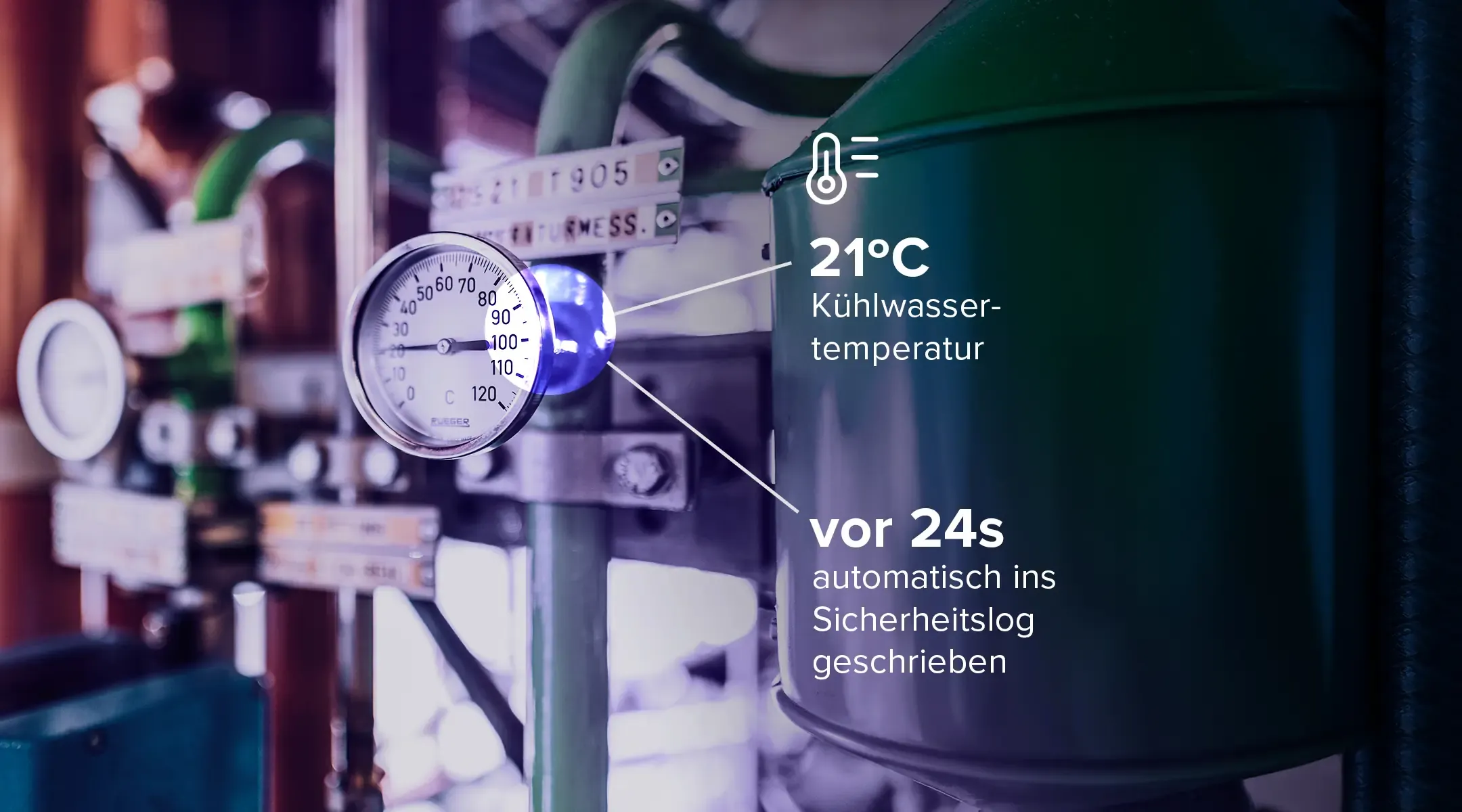
Predictive maintenance uses data to detect the condition of assets or components at an early stage and to predict maintenance requirements. In an IoT context, measured values from sensors, machines, or control systems are collected, analyzed, and translated into actionable insights.
From reactive to predictive maintenance
Instead of acting only once an asset has already failed, maintenance windows can be planned in a targeted manner. This reduces unplanned downtime and improves availability.
Data as the foundation
Typical data sources include vibrations, temperatures, pressure values, run times, power consumption, or machine status information. What matters is that this data is captured reliably and evaluated in context.
Relevance for maintenance and production
For maintenance, this means greater plannability. For production, it means fewer interruptions and higher plant safety. Both areas benefit from better transparency about the condition of the assets.
What energy monitoring means in an IoT context
Energy monitoring describes the systematic capture and evaluation of energy consumption in plants, lines, or sites. The goal is to make consumption transparent and to reveal optimization potential.
Making consumption visible
In everyday operations, much energy consumption remains unclear because it is not captured granularly enough. IoT-based solutions provide a significantly better data basis here.
Identifying load peaks and inefficiencies
With suitable data, load peaks, unnecessary consumption, or inefficient operating states can be identified. This is not only relevant from a cost perspective, but also for sustainability and reporting objectives.
Contribution to management and reporting
Energy monitoring provides not only operational insights but also data for management, reporting, and company-wide governance. As a result, energy consumption is not merely observed but actively integrated into decision-making logic.
Which technical foundations these use cases require
Predictive maintenance and energy monitoring only work reliably if the technical basis is right. This includes sensors, connectivity, data center, platform, and analytics.
Reliable data capture
The data must be captured with sufficient quality and sampling frequency. Only then can patterns, deviations, and trends be analyzed meaningfully.
Clean transmission and storage
The collected data must reach the platform securely and stably and remain available there. At this point, connectivity and data center are key success factors.
Analysis and visualization
Only through suitable dashboards, rules, or analytics functions does raw data become usable information. The quality of the analysis determines whether the use case actually delivers added value in everyday operations.
Which economic benefits can arise
The economic effects of predictive maintenance and energy monitoring lie primarily in avoiding losses and in making better use of existing resources.
Fewer unplanned outages
When maintenance is organized predictively, the likelihood of unplanned downtime decreases. This increases availability and reduces consequential costs.
Better use of maintenance resources
Maintenance can be planned more precisely. This reduces unnecessary deployments and improves the utilization of the maintenance team.
Transparent energy use
Energy monitoring makes it possible to analyze consumption systematically and to prioritize reduction measures. This can have a direct impact on costs, efficiency, and sustainability goals.
Higher decision quality
When data is not only collected but also translated into comprehensible information, departments and managers can make better decisions. This is a central benefit of industrial IoT.
The role of the IoT System House
An IoT System House can support these use cases from technical design through to ongoing operations. This turns individual applications into robust operational building blocks.
The systems integrator can:
- identify the relevant data sources,
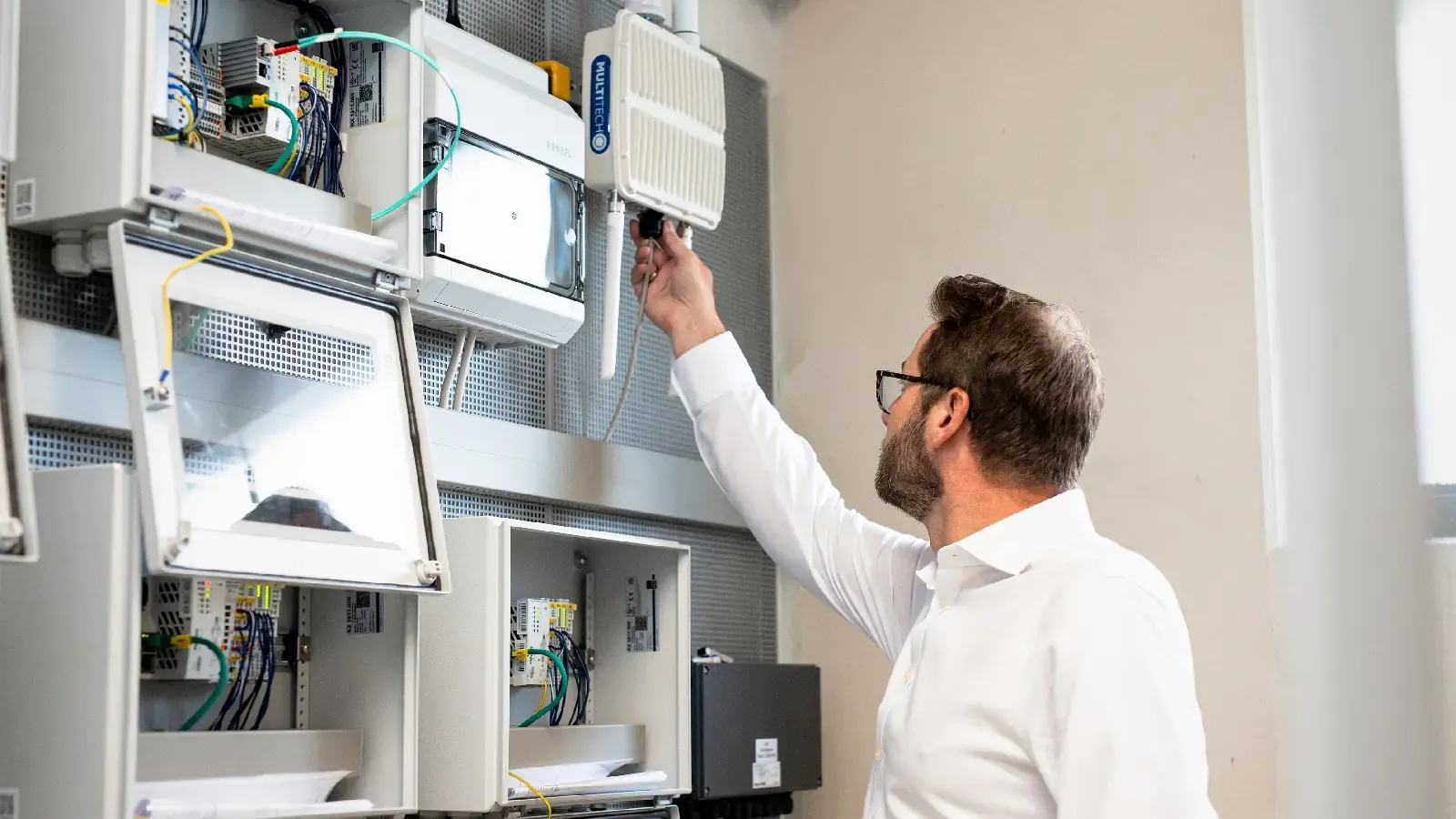
- integrate sensors and connectivity,
- build analytics and reporting structures,
- ensure security and operational responsibility,
- and operate or further develop the solution over the long term.
Do not consider use cases in isolation
Predictive maintenance and energy monitoring unfold their value especially when they are embedded in an overarching IoT architecture. This is precisely where the IoT System House contributes its strengths.
Which questions companies should clarify in advance
Before launching such a project, companies should answer the following questions:
- Which plants or processes are particularly critical?
- Which data is already available?
- Where do the highest costs or failure risks arise?
- Which goals should be prioritized: availability, energy, transparency, or reporting?
- How should data be captured, processed, and visualized?
- Who takes responsibility for operations and further development?
- Which existing systems need to be integrated?
The more clearly these questions are answered, the more precisely the use case can be planned.
Conclusion
Predictive maintenance and energy monitoring are among the most effective IoT application areas in an industrial environment. Both use cases create transparency, reduce risks, and deliver concrete operational benefits.
They are particularly valuable for companies because they do not remain abstract but have a direct effect on plant availability, efficiency, and costs. An IoT System House helps to implement these applications in a structured way and to transfer them permanently into operations.