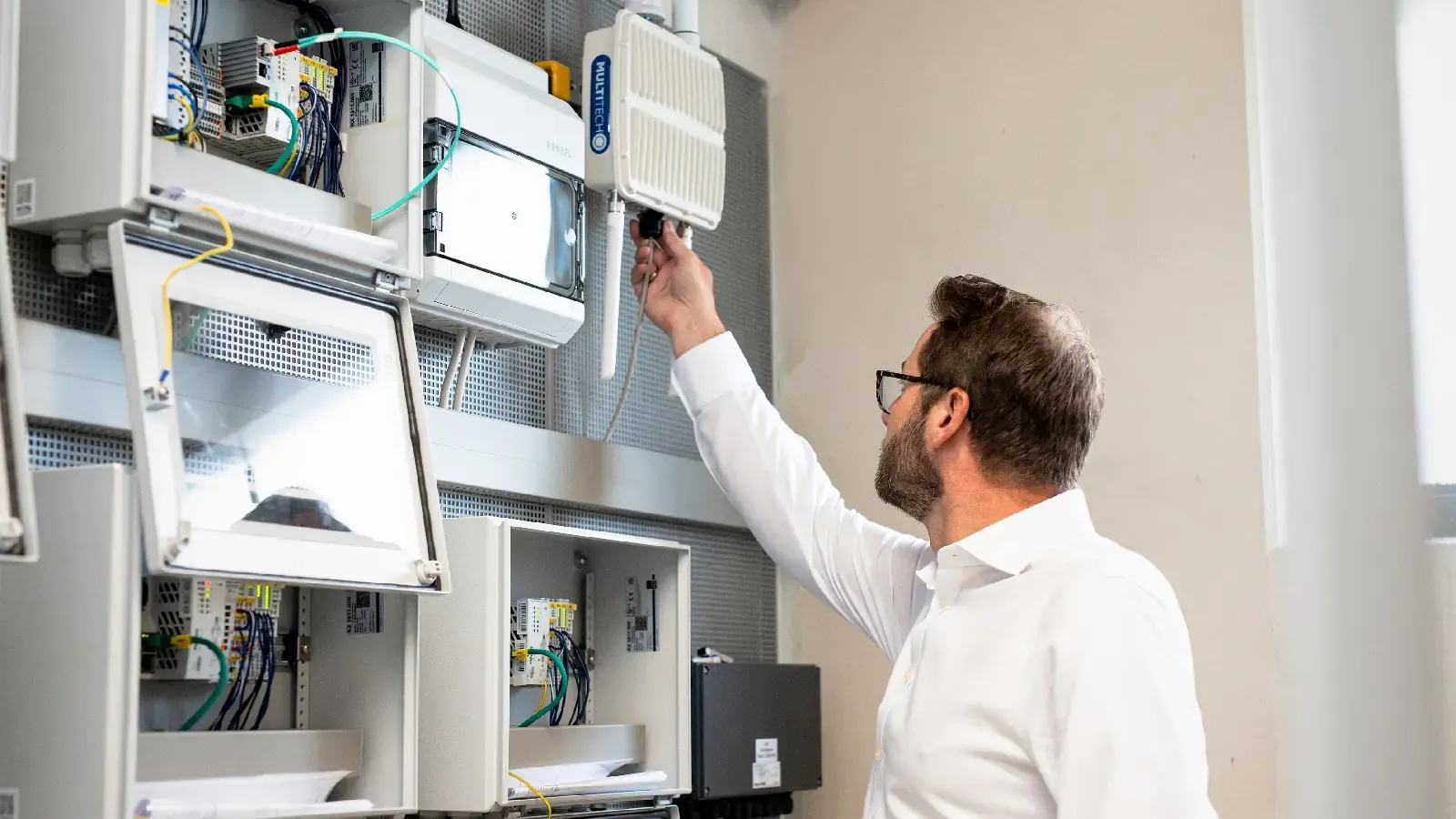
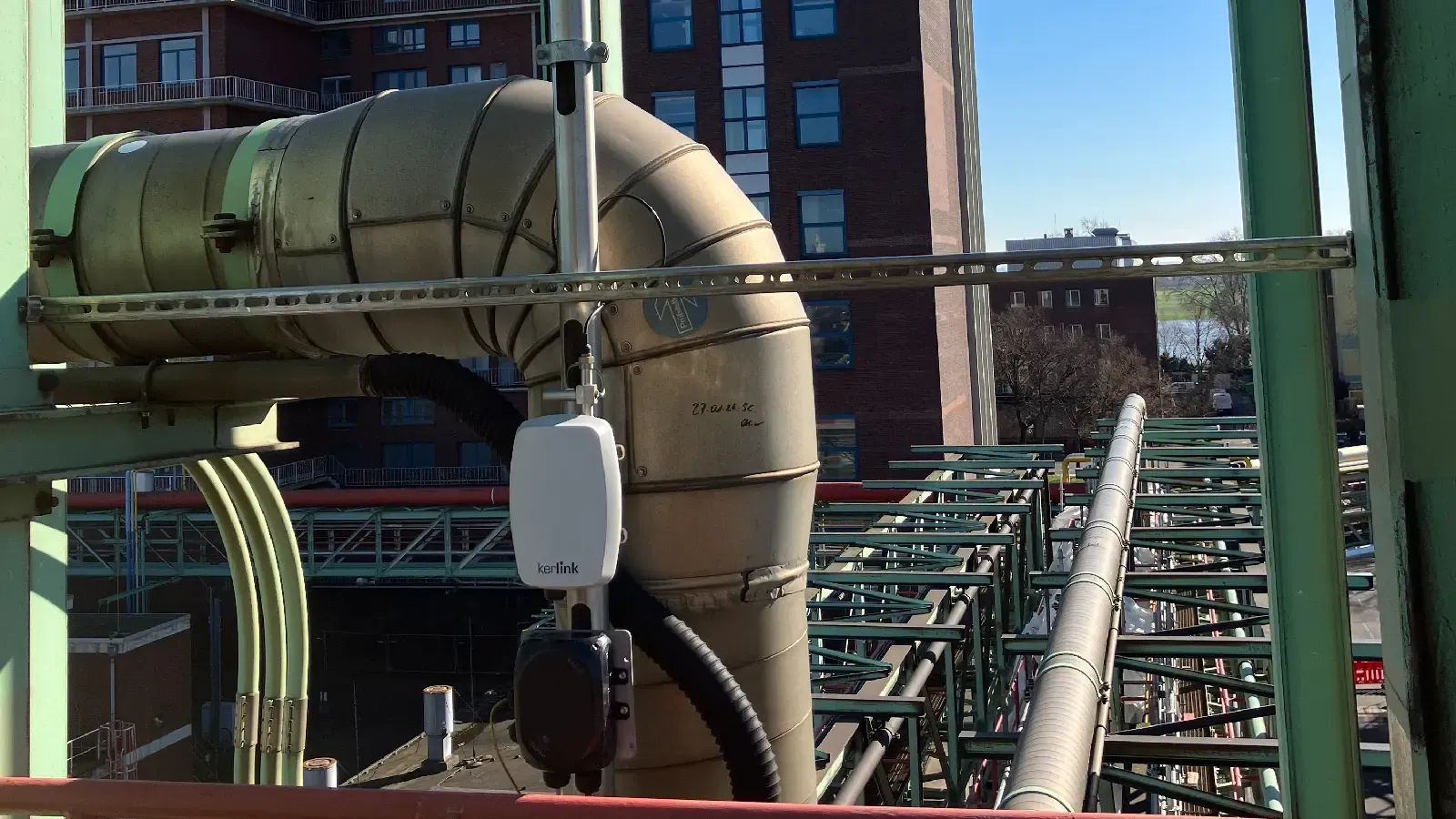
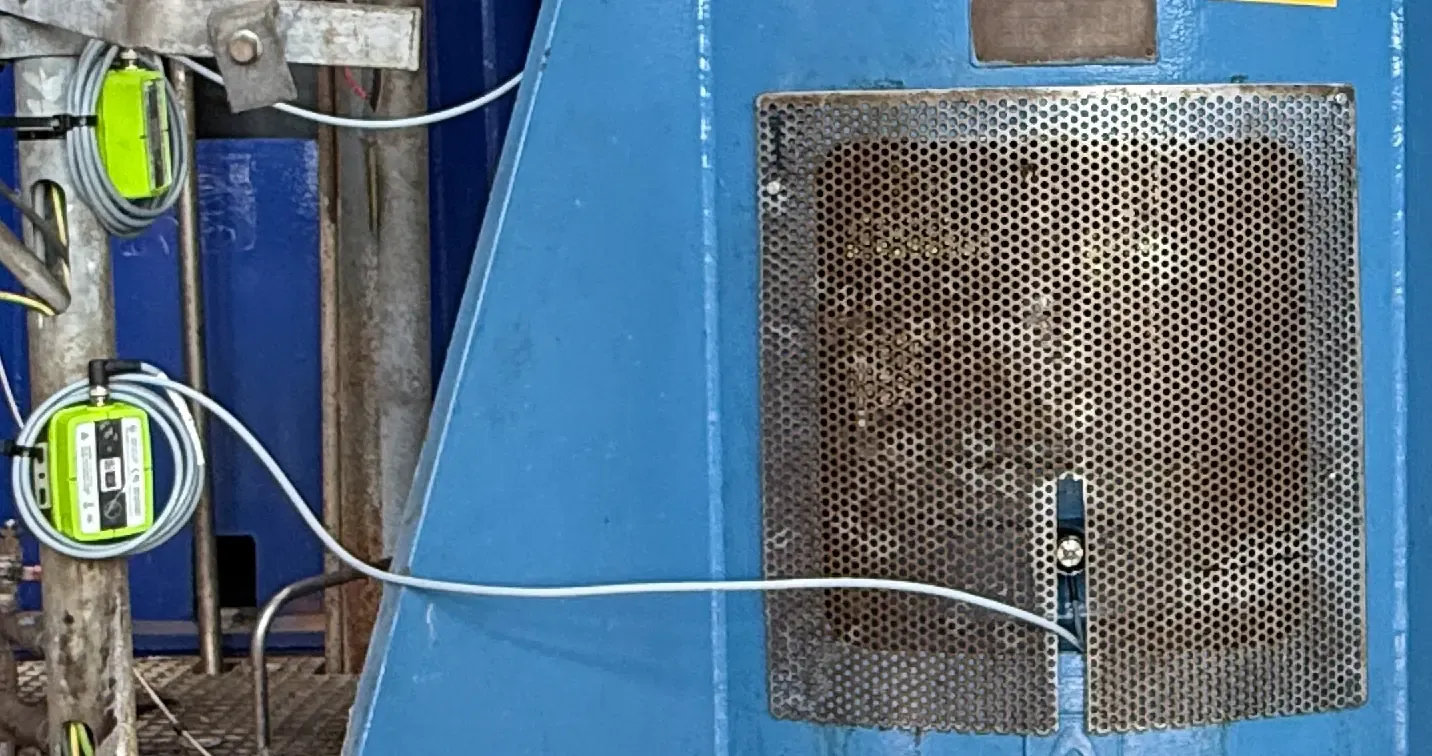
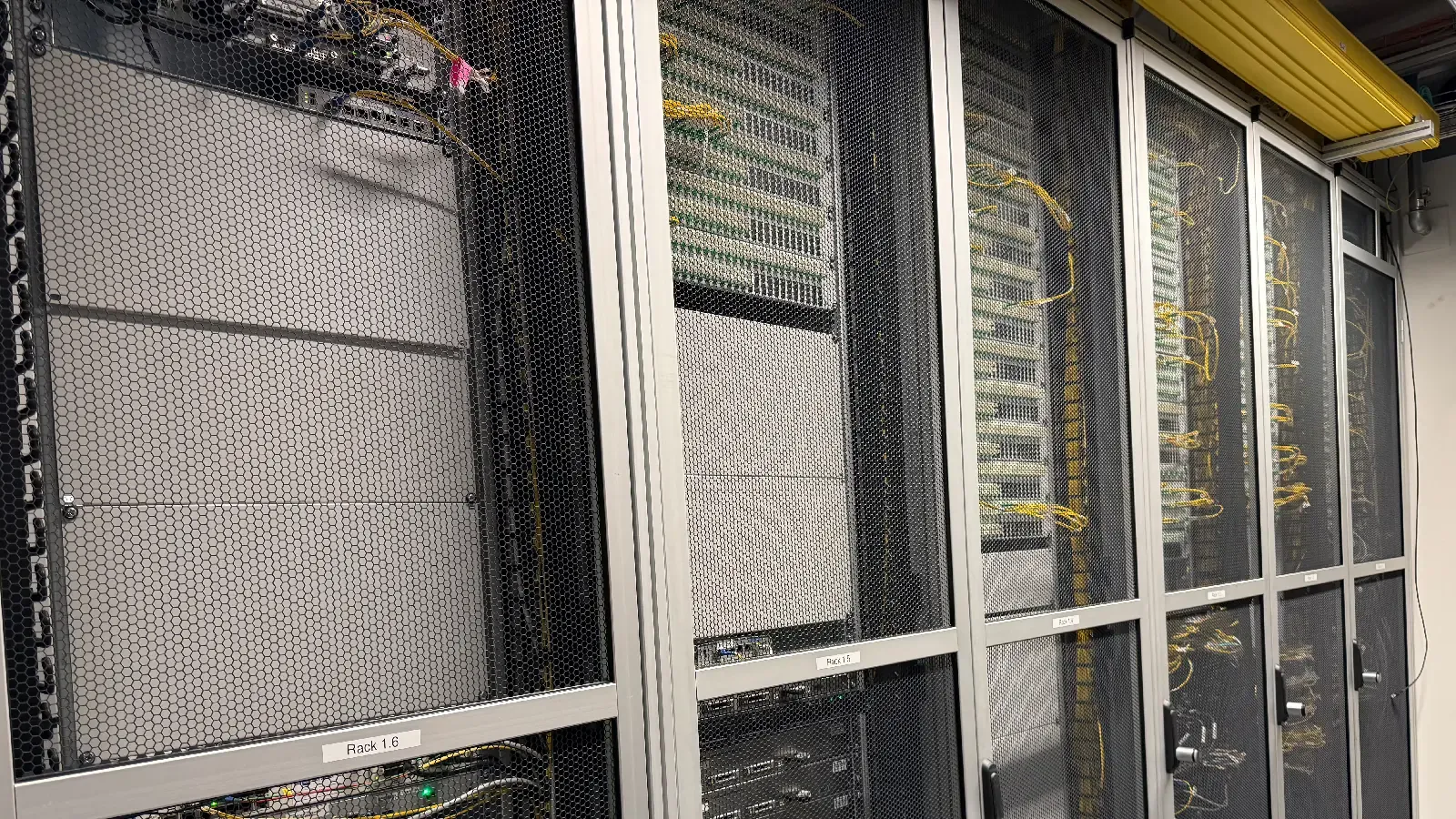
End-to-end process automation doesn't just mean automating individual assets or data points. It refers to a continuous chain from data acquisition through processing to the triggering of concrete actions in operations.
The IoT System House connects sensor technology, OT, IT, data architecture, and operational processes in such a way that technical signals produce operational impact. So it's not just about collecting data, but about translating decisions, responses, and automation into a functioning overall process.
What end-to-end process automation means
End-to-end process automation describes an automation logic that doesn't stop at the machine or the dashboard, but covers the entire path from acquisition to response.
An overview of the chain:
- A sensor or a machine generates data.
- The data is transmitted and stored.
- It is analyzed or evaluated.
- Rules, thresholds, or events trigger responses.
- These responses feed back into the process.
In industrial practice, this is about availability, quality, safety, efficiency, and response speed. The better this chain works, the more data becomes a genuine operational lever.
Where the IoT System House comes in
The IoT System House is the entity that not only connects this chain technically, but turns it into a workflow that can be used in industry.
Typical tasks
- Integrating sensor technology and data sources in a meaningful way.
- Connecting IT and OT technically and organizationally.
- Building stable, traceable data flows.
- Linking alerting, visualization, and process logic.
- Designing the solution so that it works in day-to-day operations.
- Factoring in scaling and rollout.
An IoT System House doesn't think in isolated systems, but in terms of the impact on the operational process.
Why conventional IT isn't enough for this (becomes -> Conventional IT isn't enough for this.)
Conventional IT is indispensable for networks, security, storage, and operations. For end-to-end process automation, however, it is usually not sufficient on its own, because it doesn't automatically bring the industrial logic with it.
What's also needed
- OT expertise.
- Proximity to the field.
- Machine and plant context.
- Process understanding.
- Security and compliance awareness.
- Feedback into real operational workflows.
The consequence: process automation in industrial environments is not a purely IT task. It requires an entity that brings IT and OT together in the operational context.
How do captured IoT data become concrete operational decisions and process steps?
The path from data to impact
The real added value doesn't arise from collecting data, but from responding to it. The IoT System House ensures that this response is not random, but rule-based, traceable, and operationally meaningful.
Typical levels of impact:
- Creating transparency.
- Detecting deviations.
- Triggering alarms or events.
- Initiating measures.
- Feeding responses back into the process.
- Improving or stabilizing conditions.
Without this impact, IoT stops at mere visibility. With a well-thought-out systems integrator approach, it becomes a control instrument.
Examples of end-to-end automation
Condition monitoring: Sensors detect changed conditions, a system evaluates the data, and the result triggers maintenance or inspection.
Asset tracking: An object is located, its availability becomes visible, and logistical or operational decisions follow from this.
Energy monitoring: Consumption values are recorded, deviations are detected, and measures to increase efficiency are triggered.
Room and environmental monitoring: Temperature or humidity deviations lead to alarms, measures, or adjustments in warehouse and operating processes.
The role of the IoT System House in the control loop
A meaningful control loop in industrial IoT consists of more than just measuring and displaying. Above all, it also includes feedback and process adjustment.
Simplified logic:
- OT measures or generates data.
- IT transports, stores, and processes it.
- Analysis and control mechanisms evaluate it.
- Actions are triggered.
- The process responds.
- New data shows the effect of the measure.
The role of the IoT System House
The IoT System House ensures that this loop doesn't fail because of interfaces, responsibilities, or missing operational logic.
In projects, different decision-makers and areas of responsibility have questions that go beyond technical function; it's always also about responsibility for the overall process. Conventional IT isn't enough for this. This is where the IoT System House provides orientation.
Typical questions
- Who connects data with operational impact?
- Who ensures that the response makes sense?
- Who is responsible for operations, stability, and scaling?
- Who keeps IT, OT, and business unit requirements aligned?
If these questions go unanswered, automation remains fragmented. This is where the IoT System House provides the necessary orchestration.
Conclusion
End-to-end process automation is more than networks, more than sensor technology, and more than dashboards. All of these building blocks are important, but only their interaction makes the solution effective.
The role of the IoT System House in end-to-end process automation is to turn data into effective process logic. It connects the technical level with operational reality and ensures that automation doesn't end in theory, but works in everyday operations.
In industrial environments, that is the difference between selective digitalization and genuine process effectiveness.
Review your automation requirements along the chain of data acquisition, processing, response, and operations - and find out in a personal conversation what role Conneqtive should take on as an IoT System House in your project.
Request a consultation here // Book a consultation appointment