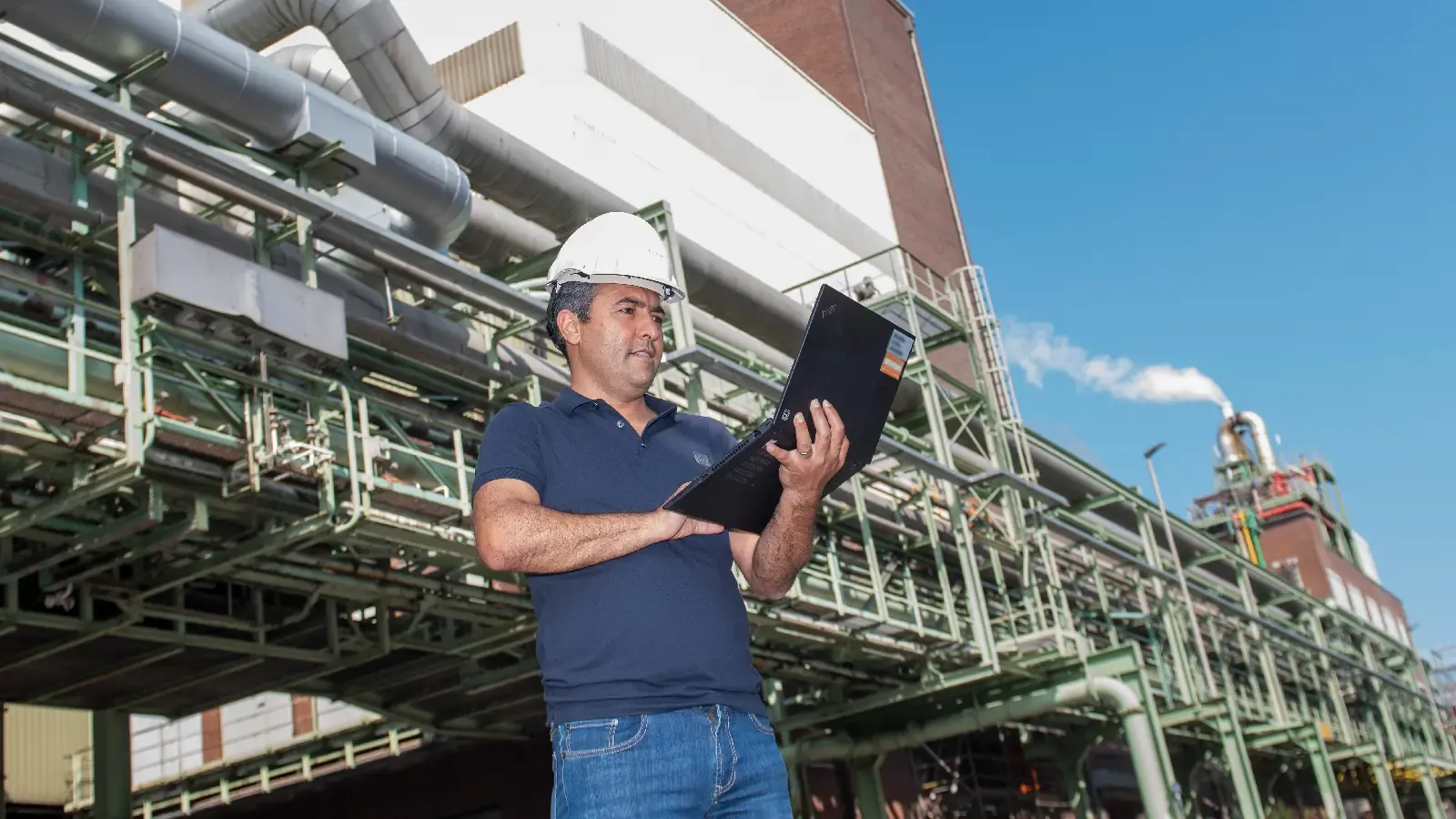
Especially in industrial and river ports, container terminals, logistics centers, landfills, and plant sites with clearly defined operating areas, it becomes evident that private 5G campus networks can be a suitable technical foundation. They connect mobile and stationary systems within a controllable area, creating the basis for autonomous applications in productive operation.
In such scenarios, it is not just about networking individual machines. What matters is that vehicles, handling machinery, the control center, sensor technology, and safety zones continuously share the same operational status. Only then can routes be planned, restricted areas taken into account, encounters with other traffic participants secured, and material movements reliably integrated into ongoing operations.
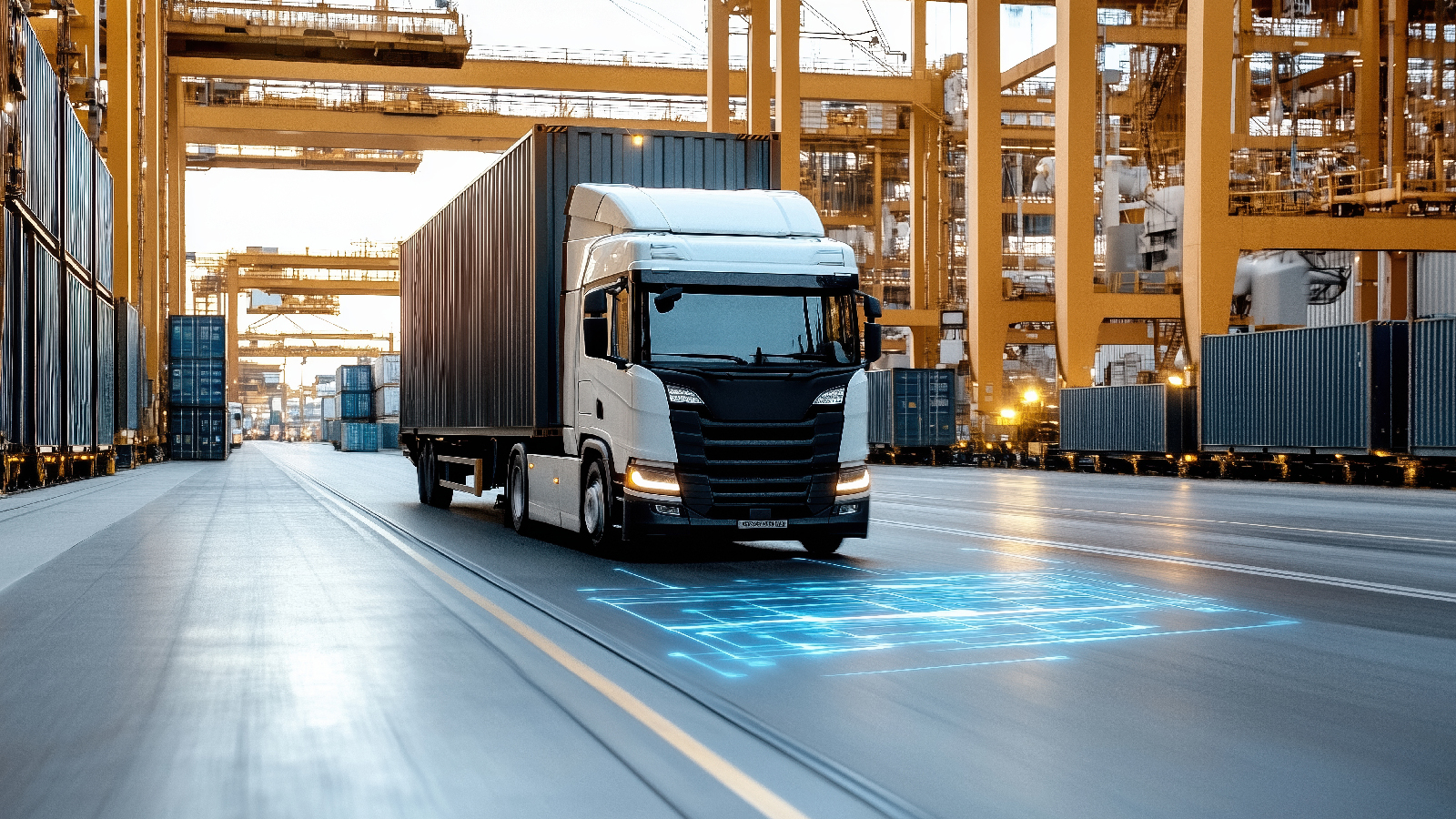
What a private 5G campus network delivers
Private 5G campus networks are more than just “fast internet.” They provide a dedicated, locally controlled communication environment designed for industrial requirements. This is especially important when autonomous vehicles, handling machinery, sensors, cameras, edge components, and control systems need to communicate with one another in parallel and reliably.
In industrial port operations, this is about response times, stable connections, and the ability to reliably cover large areas and changing movement patterns. This is precisely where private 5G campus networks become interesting compared to classic radio or WLAN approaches, because network quality, security architecture, and operational responsibility can be specifically tailored to the respective location.
How autonomous systems are operated reliably on a technical level
For autonomous vehicles and mobile working machines to function reliably in industrial ports, several technical layers must work together seamlessly. Private 5G campus networks handle stable communication, sensor technology supplies environmental and status data, edge components enable computing power close to the point of use, and the digital twin maps the area digitally. Only this combination creates a resilient end-to-end architecture.
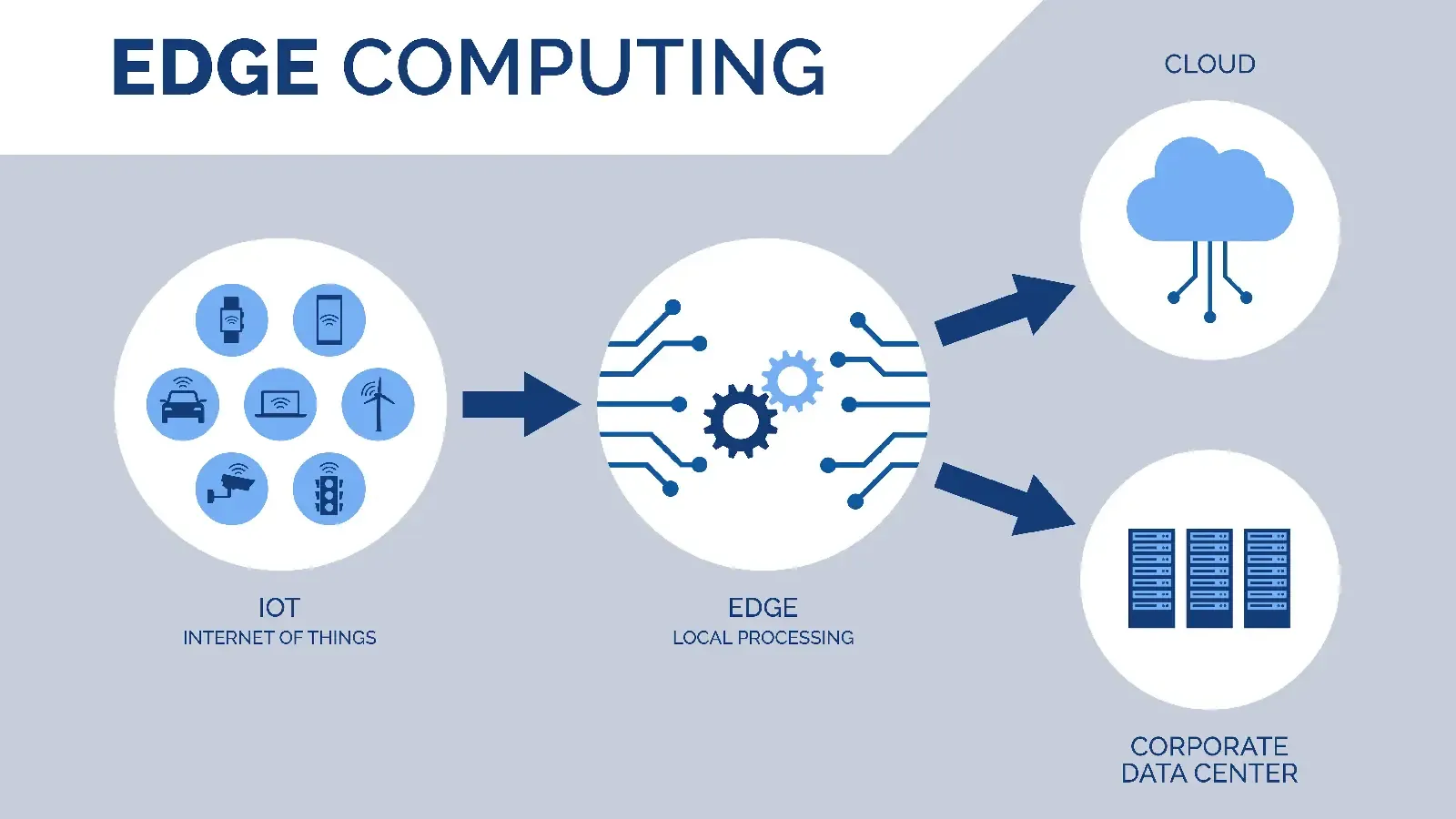
For productive applications, it is essential that data does not have to travel unnecessarily through remote systems. The closer analysis, control, and decision-making take place to the machine or the site, the more robust the overall system becomes. This is especially true in scenarios with high dynamics, changing movements, and safety-critical processes.
From the network to the machine fleet
The real added value does not come from the radio network alone, but from its interaction with fleet management, machine control, and operations management systems. A private 5G campus network creates the prerequisite for position data, machine states, driving orders, safety information, and video data to be reliably exchanged between machine, control center, and edge systems.
Why private 5G campus networks in particular are so relevant
Private 5G campus networks combine several advantages in industrial environments: definable latency, high availability, plannable area coverage, and greater control over data and operations. For autonomous systems, these properties are not optional but a basic requirement. If a vehicle or machine is to operate on-site without continuous, reliable communication, the network must deliver exactly this level of quality.
There is also the security perspective: in a private network, access, priorities, and operational limits can be controlled better than in open or shared infrastructures. This makes a private 5G campus network particularly relevant wherever autonomous applications in productive operation must not only function technically but also be properly embedded from a regulatory and organizational standpoint.
This involves more than IT security. For autonomous machines, network and access protection must be considered together with functional safety in operation: for example, through geofencing, defined driving zones, emergency stop concepts, prioritization of safety-relevant data, and clear operational responsibilities.
The role of edge, sensor technology, and the digital twin
The infrastructure does not end at the radio mast. Autonomous systems require an architecture in which data can be processed as close as possible to the point of use. Edge computing reduces latency and relieves central systems, while sensors provide the necessary perception and the digital twin maps operational reality. In this context, the digital twin is not an abstract model but the digital image of the operating area: with driving routes, restricted zones, loading and unloading points, machine positions, and current process states.
Especially in industrial or river ports, this coupling is crucial, because process states, traffic movements, order status, and safety zones are constantly changing there. If the infrastructure does not reliably reflect this dynamic, autonomy remains limited to demonstrators or isolated test cases. Only with a consistent technical architecture can the transition from pilot project to regular operation succeed.
Infrastructure as an operating model
Private 5G campus networks are not only a technological decision but also an operational one. Anyone wanting to deploy autonomous vehicles and mobile working machines productively must also consider network operation, maintenance, security, lifecycle, and scalability. Infrastructure is therefore not a one-time investment but part of the ongoing operating model.
Whether autonomous applications work in regular operation is not determined by network quality alone. What matters is the interplay between machine capability, process integration, safety concept, operational organization, data architecture, and clear responsibilities. The private 5G campus network provides the communication basis – stable operation only results from proper integration into processes, systems, and responsibilities.
This is especially important in industrial sites where multiple systems, user groups, and security requirements come together. Here, the quality of the infrastructure determines whether autonomous applications run reliably, repeatably, and with room for expansion.
Where the architecture is already proving itself today
Current port projects and industrial campus network initiatives show that this architecture is not only sensible in theory. In port environments and large-scale industrial sites, private 5G networks are already being used for digital logistics, automation, and connected operational processes. This indicates that the technical foundation for autonomous applications already exists today and is being expanded further.
Especially in industrial ports with clearly defined areas, fixed zones, and recurring processes, infrastructure is therefore a key factor in bringing autonomous vehicles and handling machinery into productive use. The network is not just a carrier of data, but the operational prerequisite for AI, sensor technology, and digital twins to function at all in ongoing operations.
Conclusion
Private 5G campus networks are the technological enabler for autonomous vehicles and handling machinery in industrial ports. Only the combination of reliable connectivity, edge processing, sensor technology, and the digital twin creates the infrastructure needed to operate autonomous applications stably in everyday industrial operations.
Anyone wanting to deploy such systems in port facilities, plant sites, or logistics centers must therefore understand infrastructure not as a secondary condition but as the core of the solution. This is precisely what determines whether a good use case turns into a robust operating model. (cqt, agt/tn)