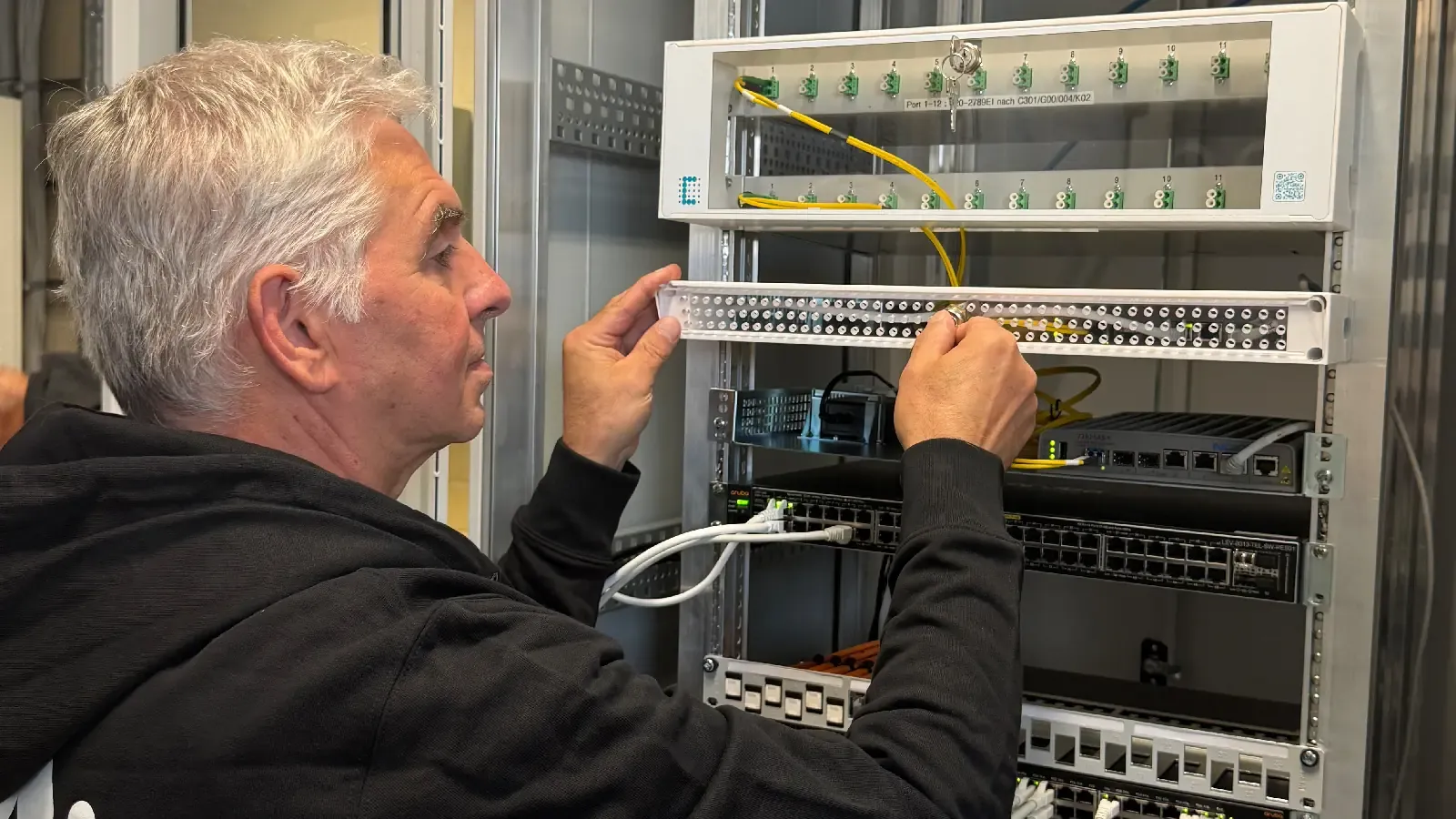
Industrial IoT requires more than connected devices and a software platform. For industrial solutions to work reliably in everyday operations, the network, data processing, hosting, security, and operational processes must be brought together into a robust overall architecture. This underlying structure is precisely what constitutes the IT infrastructure for Industrial IoT.
In practice, the infrastructure is often the decisive factor in whether an IoT project succeeds over the long term or fails after a pilot phase due to complexity, security requirements, or a lack of scalability. Anyone looking to build Industrial IoT strategically therefore needs more than individual components: they need a clear understanding of architecture.
Why a Clear Infrastructure Architecture Is Necessary
An industrial IoT solution is always an interplay of multiple layers. Sensors, machines, networks, platforms, and applications must be interconnected without compromising availability, security, or operational reliability. The more complex the industrial environment, the more important a clear infrastructure architecture becomes.
Industrial IoT Is a System, Not a Single Product
Industrial IoT does not work through a single component, but through the interaction of various building blocks. Data must be captured, transported, processed, stored, and made usable. If this chain does not function properly at any point, the overall system loses value.
Industrial Reality Is Heterogeneous
In many companies, modern digital systems meet older assets, differing protocols, and infrastructures that have grown over time. A good IoT architecture must account for this heterogeneity rather than compounding it with additional isolated solutions.
A Lack of Architecture Creates Follow-Up Costs
When infrastructure is built up only reactively, the result is often media discontinuities, unclear responsibilities, and security gaps. This later leads to increased operational effort and makes scaling more difficult. That is why the architecture should be thought through in a structured way from the outset.
Which Layers an IoT Infrastructure Comprises
A robust industrial IoT infrastructure consists of several layers that build on one another. These layers should be viewed within a consistent model.
Field and Device Layer
At the lowest level are sensors, machines, controllers, and gateways. They capture states, values, and events directly from the industrial environment. This layer forms the basis for all subsequent data and analysis processes.
Communication and Network Layer
For data to reach the platform reliably from the field, stable and secure communication paths are required. This layer connects assets, sites, and systems with one another and ensures that data is transported in a controlled manner.
Processing and Hosting Layer
Data has to be processed and stored somewhere. This requires hosting, data center, or cloud structures that support the operation of the IoT platform. This layer forms the technical core of data processing.
Platform and Application Layer
At this level, data is collected, analyzed, and prepared for business applications. This is where dashboards, reports, alerts, and interfaces to other enterprise systems are created.
Security and Operations Layer
Every IoT infrastructure needs mechanisms for access control, segmentation, monitoring, maintenance, and recovery. Security and operations are not add-on topics but integral parts of the architecture.
How the Layers Work Together
The individual layers of an IoT infrastructure only deliver their benefits when they work together. A sensor alone creates no added value, and neither does a platform without a stable network and operational foundation. Only when all layers are aligned with one another does a viable industrial IoT solution emerge.
From Data Capture to Data Use
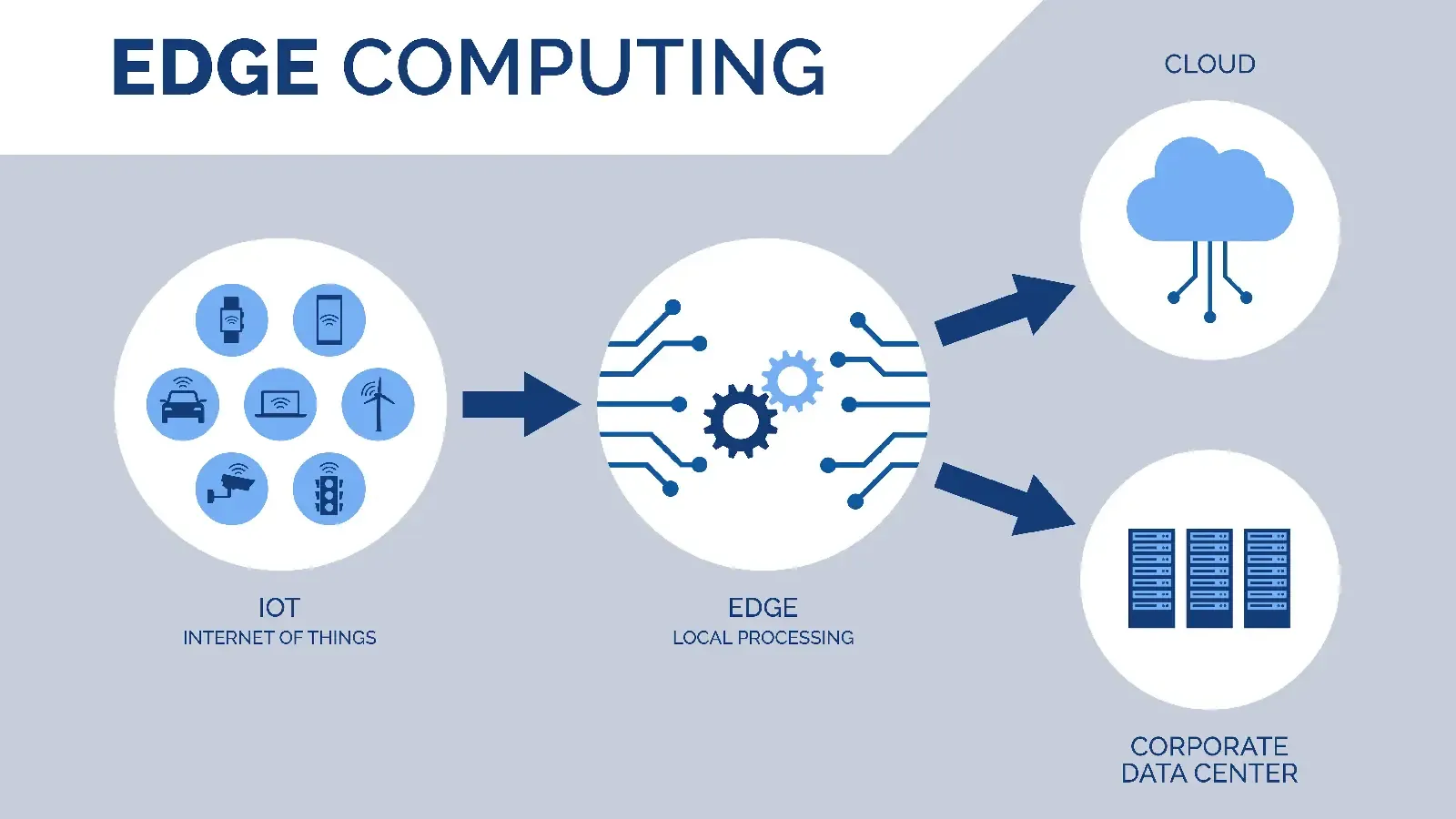
The chain begins with data capture at the device, continues with the transport of the data and its processing in hosting or cloud structures, and ends with its use in applications or dashboards. Each stage depends on the one before it.
Friction Arises at the Interfaces
When responsibilities, formats, or operating models are unclear, friction arises between the layers. This is especially critical at the interface between OT and IT, because different priorities and technical logics meet there.
Architecture Determines Scalability
A solution planned for only one site or a single use case is often difficult to extend. A good infrastructure is designed so that it can accommodate additional sites, further data sources, or new use cases.
Which Requirements an Industrial IoT Infrastructure Must Meet
For Industrial IoT to work in everyday operations, the infrastructure must meet several requirements simultaneously. These requirements are not optional; they are fundamental to success.
Availability
Industrial processes frequently depend on continuous data streams. The infrastructure must therefore be stable enough to work reliably during ongoing operations. Otherwise, outages can have a direct impact on transparency, control, and responsiveness.
Scalability
When an IoT solution proves successful, it is often extended to additional assets, plants, or sites. The infrastructure must therefore be planned so that it can grow along with them without having to be rebuilt from the ground up.
Security
As connectivity grows, so do the requirements for protecting devices, data, and communication paths. Security mechanisms must therefore be built into the architecture from the very beginning.
Integration Capability
An industrial IoT infrastructure must work together with existing IT and OT systems. This applies to technical interfaces as well as organizational processes. Only when integration works cleanly does a robust overall model emerge.
Why the IT Infrastructure Is More Than a Technical Foundation
The infrastructure is not only a prerequisite for operations but also a strategic lever. It influences the costs, speed, security, and long-term value of the IoT solution.
Infrastructure Determines Operability
If the network, hosting, or platform operations are not robust, even the best IoT application cannot work reliably. The infrastructure therefore has a direct bearing on operational success.
Infrastructure Influences Cost-Effectiveness
A well-planned architecture reduces later adaptation costs, simplifies operations, and creates better conditions for scaling. This has a direct effect on the cost-effectiveness of the project.
Infrastructure Is Part of the Strategic Decision
The choice of architecture, hosting model, and integration approach is not a purely technical detail. It has implications for governance, the level of security, and the company's future flexibility.
The Role of the IoT System House
An IoT System House brings the various infrastructure building blocks together into a consistent overall model. It ensures that technical, operational, and security-related aspects are considered together.
Architecture Instead of Piecemeal Solutions
A good IoT System House views the infrastructure as an interconnected system. It plans not just individual components but develops an overall architecture that fits the specific industrial environment.
Bringing IT and OT Together
The ability to connect the IT and OT worlds is particularly important. An IoT System House must understand the logic of both sides and be able to translate it into a viable technical structure.
Factoring In Operations from the Start
It is not only implementation that counts, but also subsequent operations. The infrastructure should therefore be designed so that monitoring, maintenance, security, and further development are factored in from the beginning.
Which Questions Companies Should Clarify in Advance
Before an industrial IoT infrastructure is built or modernized, companies should answer a few fundamental questions.
Which Data Sources Are to Be Connected?
The type of data sources determines the structure of the entire infrastructure. Sensors, machines, controllers, and existing IT systems place different demands on integration and operations.
Which Availability and Security Requirements Apply?
Depending on the industry and the application, these requirements can vary widely. They influence how the network, hosting, and platform operations must be designed.
How Many Sites or Assets Are to Be Integrated?
The answer to this question helps determine whether a local, hybrid, or cross-site architecture makes the most sense.
What Level of Operational Responsibility Is Desired?
Not every infrastructure is operated entirely in-house. Some companies rely on their own operational responsibility, others on managed services or hybrid models. This decision has an impact on the architecture.
Conclusion
The IT infrastructure is the foundation of every industrial IoT solution. It combines data sources, networks, platforms, hosting, and security mechanisms into a robust overall system. Without this foundation, Industrial IoT often never gets beyond pilot projects.
Anyone who wants to build Industrial IoT professionally should not treat infrastructure as a side issue but as a strategic success factor. This is precisely where the technical and operational feasibility of the entire solution begins.